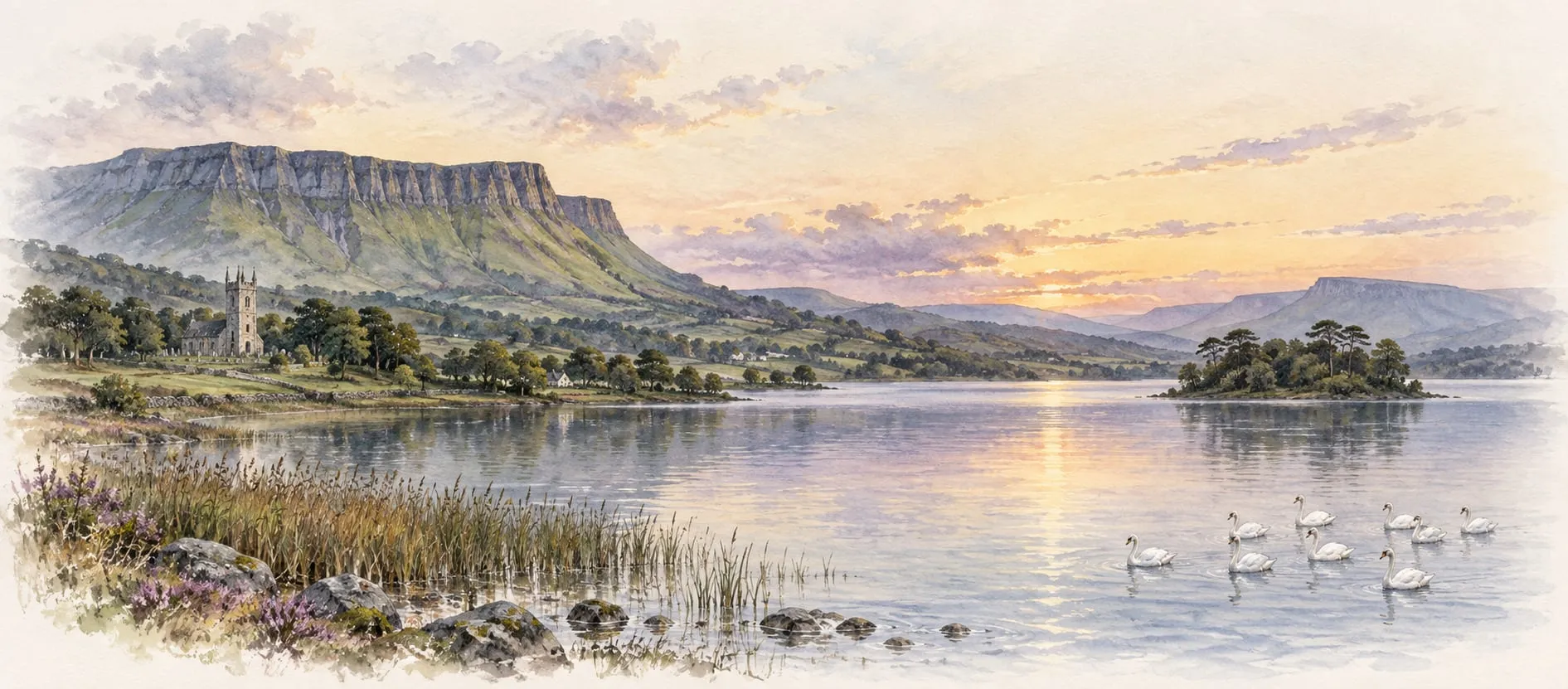
The Fairy Pedant
Scene:—A circle of Druidic stones.
First Fairy
All
Second Fairy
All
Second Fairy
All
First Fairy
Turning away.
All
Text: Poetry, by W. B. Yeats (Standard Ebooks, 2024), from the collected editions of 1908 to 1928. Public domain.
In brief
SummaryFairies beg a young, brooding fairy to leave the ancient stones.
The scene is a circle of Druid stones by moonlight. A band of fairies calls to the youngest of their number, who has drifted away from their dances to brood over the "historied stone". They urge her to come and feast, and warn her that she is "wasting away". She begs to be left alone: she wants to ponder the history in the stone, measure the minds of flowers and count the days of the meadow-mice. Each time she explains, the chorus answers with the same line. At last the first fairy turns away with a lament for her lost face, laugh and bright eyes, and the chorus speaks of her as already gone.
Lines to remember
You are wasting away, little fairy.
And measure the minds of the flowers,
Line by line
Lines 1 to 8The first fairy calls
The first fairy addresses the "sister of sorrowful gaze", who has left the fairy court ("our lawn and our levee") for "another dominion". Even the roses round her are heavy and "dream of the end of their days". Her wing is "Unpruned", untended, as she wanders and whispers alone.
Lines 9 to 12Come away
The whole band joins in with a playful invitation: they will dance while the moon is in the wood and "then feast in a dairy", raiding the farmhouse. The last line gives the chorus that will keep returning: "You are wasting away, little fairy."
Lines 13 to 20Leave me alone
The young fairy calls her companions "cruel ones" and asks for time to ponder "The history here in the stone". Afterwards she will study "the minds of the flowers" and watch the "meadow-mice wary". Her list breaks off, and the chorus cuts in with its single line.
Lines 21 to 28Born for wisdom
She pleads again with a tiny origin story: her mother found her in "A piece of a nightingale's egg" in the long grass, and cradled her where even the birds long for "Wild wisdoms of spirit and tongue". Again the chorus answers only that she is wasting away.
Lines 29 to 36A lament
Turning away, the first fairy sings a formal lament. The "pitiless magic" of the place has bound her. Line after line mourns a lost part of her: her face, her laugh, her wings, her bright eyes and finally her "slippers of red". The repeated cry of "woe" makes it a funeral song.
Lines 37 to 40She is lost
The chorus repeats its first invitation almost word for word, with one change: "You are wasting away" becomes "She is wasting away". The fairies now speak about her rather than to her, as if she can no longer hear them.
Themes
Knowledge and joy
The title calls her a pedant, a fairy who has turned scholar. Where her sisters want to "dance and then feast", she wants to "measure the minds of the flowers" and read "The history here in the stone". The poem treats her hunger for wisdom tenderly but shows its price: she grows sorrowful, solitary and pale, and the joy of the band is closed to her.
The pull of the past
The "historied stone" of the Druid circle has a power of its own. The first fairy calls it "the pitiless place" and says its "pitiless magic" has bound her. Ancient history works like an enchantment, drawing the youngest and most thoughtful away from the moonlit dance of the present towards brooding and decline.
The chorus
The fairy band speaks as one voice, and its refrain grows heavier each time. First it is a coaxing warning; then it interrupts her unfinished sentences; finally it shifts from "You" to "She". That single change of pronoun shows the group letting her go.
Context
This is one of the early poems Yeats later dropped from his collections. It shows the young poet experimenting with drama, casting a lyric as a little scene with a setting ("A circle of Druidic stones") and named speakers. The fairies here are small, dainty creatures of lawns and dairies, far from the powerful Sidhe of his later Irish poems, but the figure of a dreamer drawn away from ordinary joy by an enchanted place runs through much of his early work.
Form
A short verse play for several voices, in eight speeches. The fairies speak in quick three-beat lines with a skipping, dance-like rhythm, rhymed alternately and often on double rhymes ("levee", "heavy"; "woodland", "good band"). The chorus line "You are wasting away, little fairy" works as a refrain, cutting off the young fairy each time she explains herself.