Song of the Faeries
Text: Poetry, by W. B. Yeats (Standard Ebooks, 2024), from the collected editions of 1908 to 1928. Public domain.
In brief
SummarySoulless faeries dance and play while their short time lasts.
The faeries sing about their own mortality. A man can hope for heaven, but a faery has no soul and simply dies, like an old leaf when the winter mists come. So, while their wings still move, they will dance in the barley, dance on the waves, tease the owls, wake the sleeping water-birds and fight over sloe-berries. The last stanza repeats the first, so the song ends where it began, with the cold fact under all the fun.
Lines to remember
But soulless a faery dies,
So let us dance where the yellow lance
Line by line
Lines 1 to 4No heaven for faeries
Humans have "a hope for heaven", but "soulless a faery dies". The comparison is homely and exact: a faery ends like a leaf "old, and withered and cold" when wintry mists rise, with nothing after.
Lines 5 to 8Dance while you can
Their wings will soon be stilled and their laughter "over and done", so they decide to dance "where the yellow lance / Of the barley shoots in the sun". The internal rhyme of "dance" and "lance" makes the line skip.
Lines 9 to 12Faery mischief
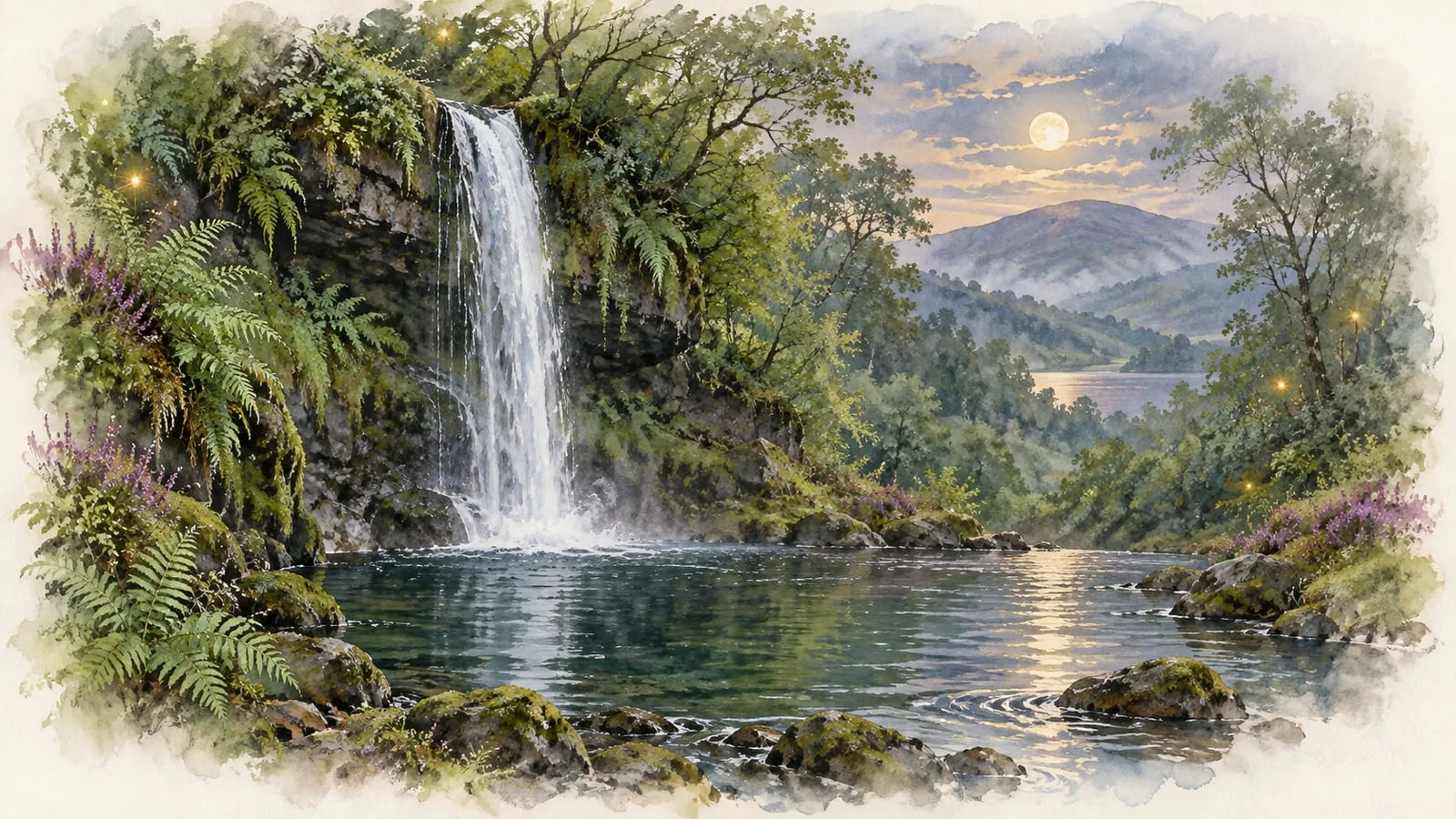
The dance moves onto the "fringed waves". They will shout at the "wisest owls / In their downy caps" and startle the sleeping water-birds: small, comic pranks against creatures that sit still and look wise.
Lines 13 to 16The refrain returns
They will even "fight for the black sloe-berries". Then the opening lines come back almost word for word: "For soulless a faery dies". The play and the dying sit side by side, and the song ends on the winter image.
Themes
Mortality
The song begins and ends with the same hard fact: "soulless a faery dies". Without a soul there is no heaven to hope for, and death is pictured as a leaf withering in the cold. The faeries are immortal-seeming creatures who know they are not.
Joy in the moment
Their answer to death is play. Dancing in the barley and on the waves, shouting at owls and squabbling over sloes, they fill the short time left with noise and movement. The word "So" at the start of lines 7 and 9 makes the dancing a direct reply to the dying.
Context
This is one of the early poems that Yeats left out of his later collections. It belongs to the years when he was gathering Irish faery lore, published as Fairy and Folk Tales of the Irish Peasantry in 1888. The idea at its heart, stated in the first two lines, is that faeries have no souls and so no share in heaven. Compare the longer faery songs he kept, such as "The Stolen Child".
Form
Four quatrains of short, lilting lines of three or four beats. Lines 2 and 4 rhyme in every stanza, and each third line carries its own rhyme inside it ("old" and "cold", "dance" and "lance", "caps" and "naps"). The quick triple rhythm suits a dance, and the repeated first stanza brings it full circle.