A Legend
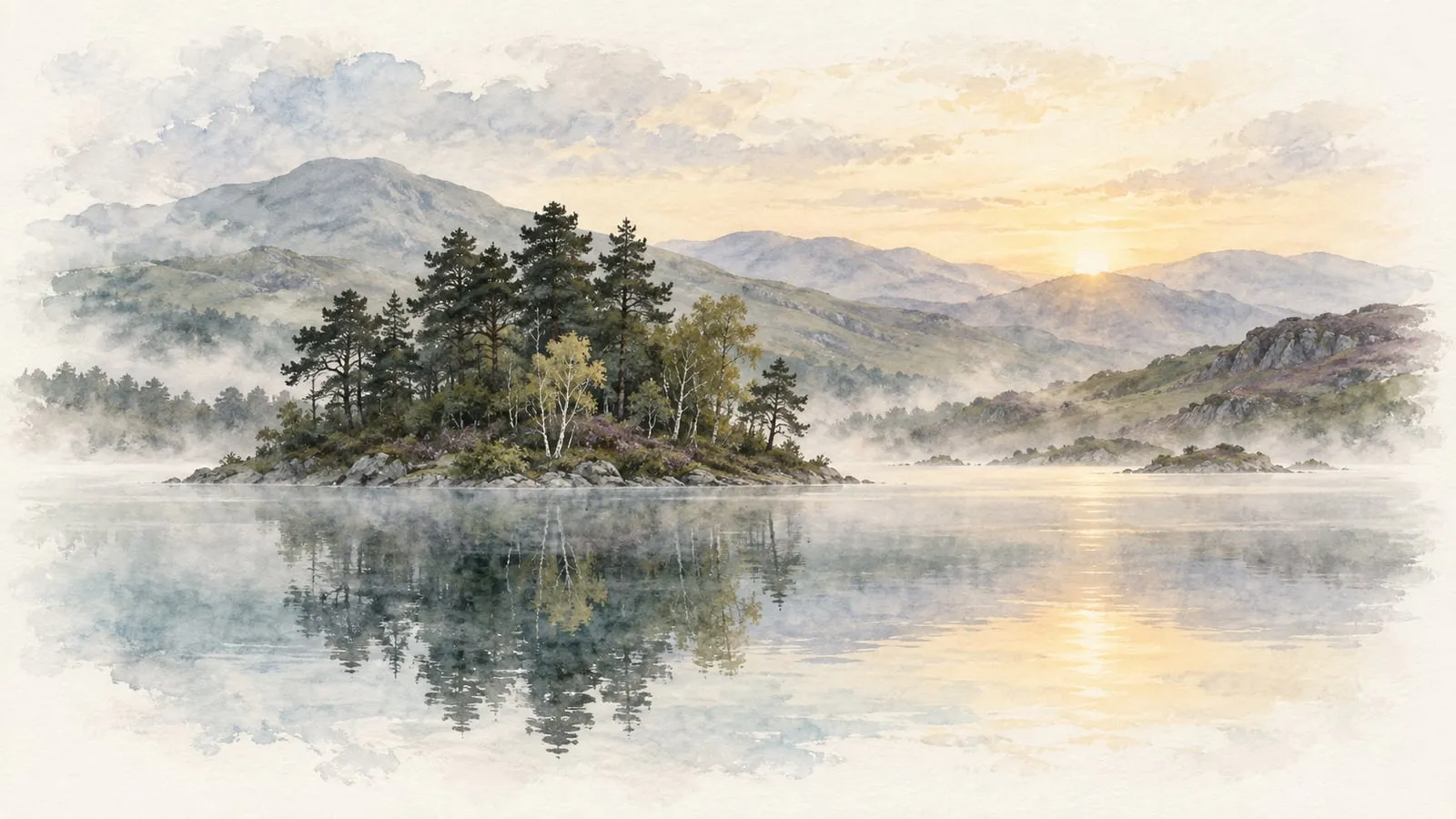
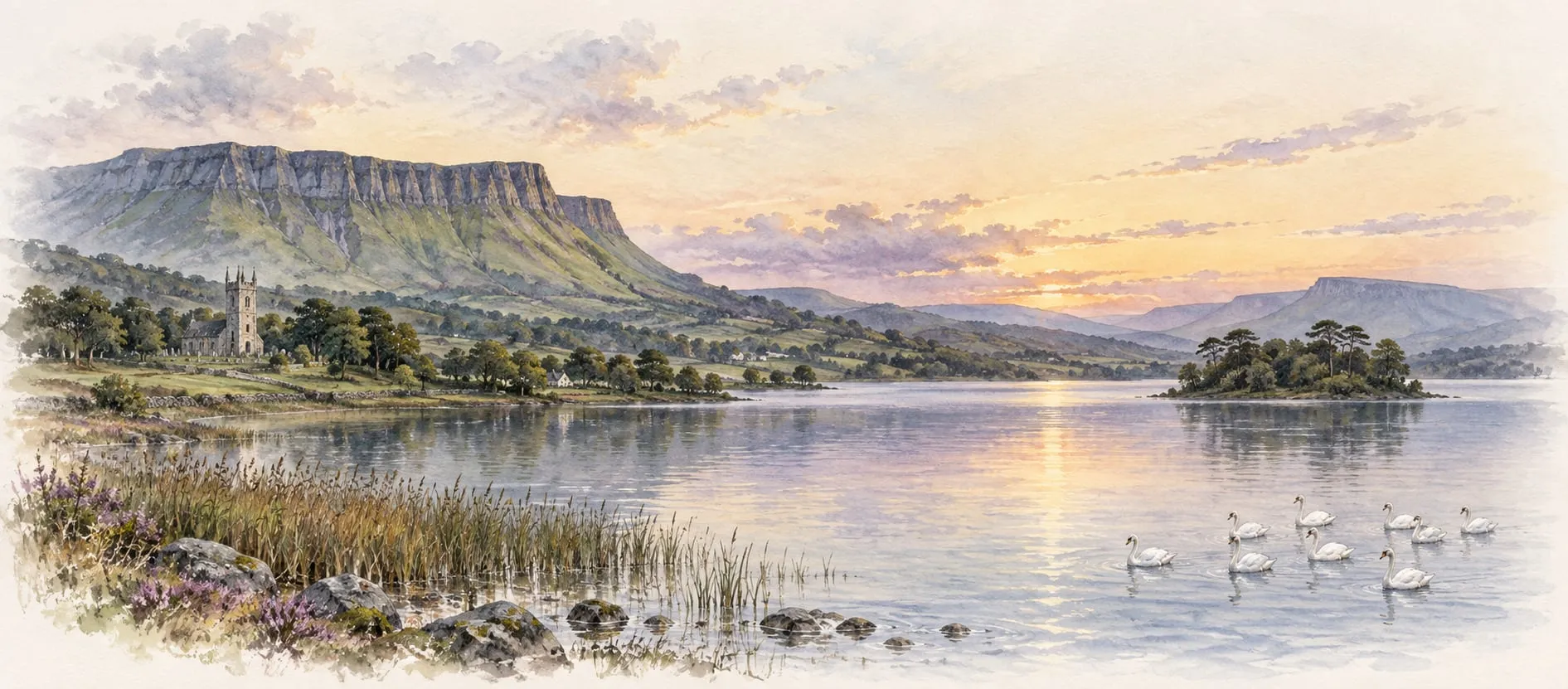
A drowned city is supposed to lie under the waters of Lough Gill.
Text: Poetry, by W. B. Yeats (Standard Ebooks, 2024), from the collected editions of 1908 to 1928. Public domain.
In brief
SummaryA town scorns God's visit, and he drowns it beneath a lake.
A headnote explains that a drowned city is said to lie under Lough Gill, and the poem tells how it came to be there. God, "The Maker of the stars and worlds", sits under the market cross and tells the townspeople that the universe is held up by the prayers of patient, good men. The ordinary folk stop to listen. Then the town's authorities pass by: a professor sneers at shallow thinking, the mayor hears talk of the poor and mutters that the stranger is a Communist, and the bishop calls him an atheist and sends everyone away. Left alone with a cock and an old horse, God goes home, sheds a single tear, and the city becomes a lake.
Lines to remember
The Maker of the stars and worlds
Are prayers of patient men and good."
And now that city is a lake.
Line by line
Lines 1 to 4God in the square
The Creator sits "underneath the market cross" of an ordinary town. Around him life goes on: old men "walking, walking" and little boys playing "pitch and toss". The doubled "walking" catches the slow aimlessness of a town afternoon.
Lines 5 to 8His teaching
God speaks one plain truth: the "props" of the stars and worlds are "prayers of patient men and good". The boys, women and old men listen, standing "upon their shadows", a strange phrase that makes them seem rooted to the spot.
Lines 9 to 12The professor
A "grey professor" passes and dismisses what he hears as "shallow thoughts about deep things". He complains that few can govern "the mind's intemperance" and that the world "plays the fool", never realising who is speaking.
Lines 13 to 16The mayor
The mayor, "leaning his deaf ear", catches only some talk of the poor, cries "Communist" to himself and hurries to the guard-house, presumably to fetch the watch. His deaf ear is the joke: he hears just enough to confirm his fears.
Lines 17 to 24The bishop
The bishop, reading from his "open book", hears God criticise the god men have made, a "god of stupor and of wrath". He murmurs "Atheist", complains of the wicked who scoff, and clears the square, sending off the old men and driving away the boys and women.
Lines 25 to 28The empty square
Now only animals remain: a cock strutting "upon his toes" and an old horse rubbing its nose along a fence rail. The quiet, comic details show a town emptied of the one audience that mattered.
Lines 29 to 32The drowning
God goes home, drops "a tear" on the city, and "now that city is a lake". The punishment is told in one line, almost gently: not fire and fury, but a single tear large enough to drown a town.
Themes
Religion and power
The people who reject God are the town's leaders: learning in the professor, civic power in the mayor, the Church in the bishop. Each hears the Creator through his own prejudice and pins a label on him, "Communist" or "Atheist". The bishop even drives the listeners away. The satire falls on official religion, which cannot recognise the divine when it sits in the market square.
Simple goodness
Against the leaders stand the ordinary people, the boys, women and old men, who listen without judging. God's message praises the "prayers of patient men and good", not doctrine or cleverness. The poem sides with humble, patient goodness and suggests that the whole universe rests on it.
Legend and landscape
The headnote ties the fable to a real place, Lough Gill, and to a familiar kind of folk tale, the city drowned for its sins. Yeats gives the old story a wry modern twist: the sin is not wickedness but the self-important deafness of professors, mayors and bishops.
Context
This is one of the early poems Yeats later dropped from his collections. It is set at Lough Gill, the lake east of Sligo town that he knew from childhood and later made famous in "The Lake Isle of Innisfree". Its prose headnote records the local tradition of a drowned city under the water. Irish tales of lakes rising over towns were common, and Yeats turns the legend into a sharp little satire on respectable society.
Form
Eight quatrains in four-beat lines, rhyming on the second and fourth lines ("cross", "toss"; "good", "stood") in the plain, steady manner of a ballad. The first and last stanzas both open with "The Maker of the stars and worlds", framing the story, and the flat, understated last line lands like the ending of a folk tale.