A Lover's Quarrel Among the Fairies
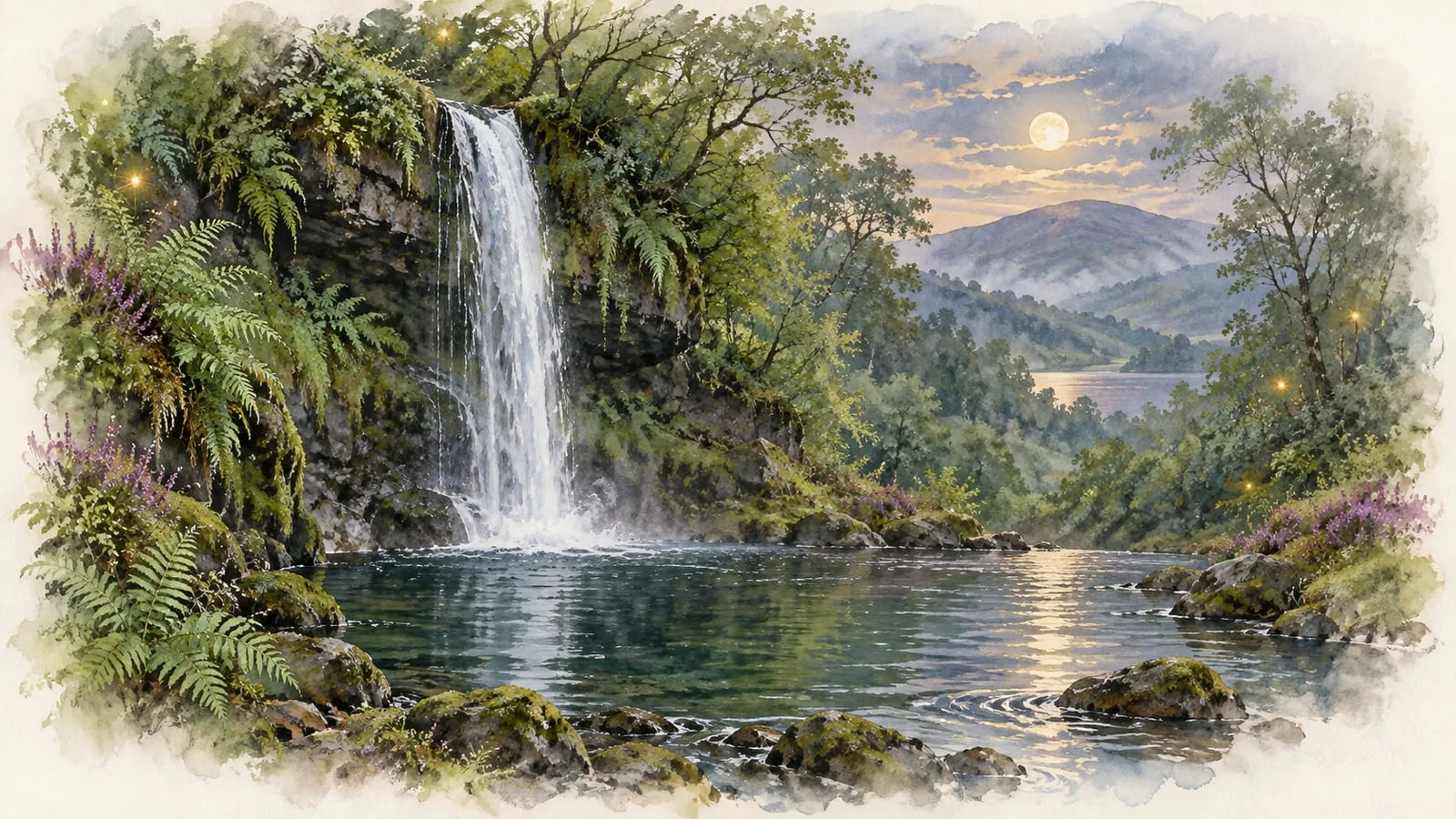
A moonlit moor. Fairies leading a child.
Male Fairies.
Girl Fairies.
Text: Poetry, by W. B. Yeats (Standard Ebooks, 2024), from the collected editions of 1908 to 1928. Public domain.
In brief
SummaryMale fairies court a stolen human child; the jealous girl fairies sulk.
A little dramatic piece set on a moonlit moor. First the male fairies speak to a human girl they are leading away: they promise to show her the glade and the high land, to let her chat with the banshee inside a green hill, and to crown her. She is so big and they so small that they dance a jig for her, while the fairy girls toss their curls in jealousy. Then the girl fairies answer. They mock the clumsy mortal "whose footfall shakes the ground", go off to tease old owls and roast berries, and predict that the males will tire of their "new-fangled queen", take her home, and come back to them on bended knee.
Lines to remember
Ah! it is so very big,
One whose footfall shakes the ground.
Line by line
Lines 1 to 8Do not fear us
The male fairies reassure the "earthly maid" and promise her a journey past willows, gorse and pasture. The lambs "Shivering closer to their dams" at the rustle of fairy feet hint that fairies are not quite harmless.
Lines 9 to 16Promises to the child
She will chat with the banshee, who is "good at heart", deep inside a green hill, and they will kneel and bring her a crown of gold. The touching detail "thy great white doll" shows she is only a child.
Lines 17 to 20Big and small
"Ah! it is so very big, / And we are so very small!" The joke of scale runs through the poem. Unable to hold the doll, they dance "a fairy jig" instead.
Lines 21 to 28Jealous girls
They point out the fairy girls, who "Lift their chins and toss their curls", and brother Cranberry Fruit, who flirts with a newt to tease them. The comedy is that of a village dance.
Lines 29 to 36The girls reply
Now the girl fairies speak, scornful of the huge mortal, "One whose breathing shakes the air". They call their friends Coltsfoot and Mousetail to come away and tease the owls.
Lines 37 to 44Owls and berries
The old owls, "Puffed like puff-balls", grumble that mice were bigger in their youth, a sly joke about old people praising the past. The fairies will roast berries by a lake while hours "swiftly pass".
Lines 45 to 56They will come back
The girls predict the end: the males will tire of their "tall, new-fangled queen", lead her home to the farm, lift the latch in alarm and return kneeling to be scolded, "And our slaves be as of old".
Themes
Fairy comedy
Unlike the eerie fairies of "The Stolen Child", these are comic and small-minded. They quarrel like young people at a dance, flirt with newts and tease owls. The humour comes from scale: the human child is a giant whose footfall "shakes the ground", and her doll is too big to hold.
Jealousy
The title's quarrel is between fairy sweethearts. The males show off to a newcomer while the girls "Lift their chins and turn away". The girls' reply is confident and a little cruel: the "new-fangled queen" is only a passing fancy, and the males will soon be their "slaves" again.
Context
This is one of Yeats's early poems that he did not keep in his collected work. It was printed in The Wanderings of Oisin and Other Poems (1889). Its light-hearted fairies come from the same years in which Yeats was gathering Irish fairy lore for his folk-tale anthologies, and the idea of fairies leading a child away echoes "The Stolen Child".
Form
Fourteen quatrains rhymed ABAB, in short seven-syllable trochaic lines ("Do not fear us, earthly maid!"). The quick, tripping beat suits dancing fairies. The poem is a small dramatic scene with a stage direction and two speaking groups, seven stanzas each.