Running to Paradise
Listen
Text: Poetry, by W. B. Yeats (Standard Ebooks, 2024), from the collected editions of 1908 to 1928. Public domain.
In brief
SummaryA carefree wanderer on the road to Paradise, where kings equal beggars.
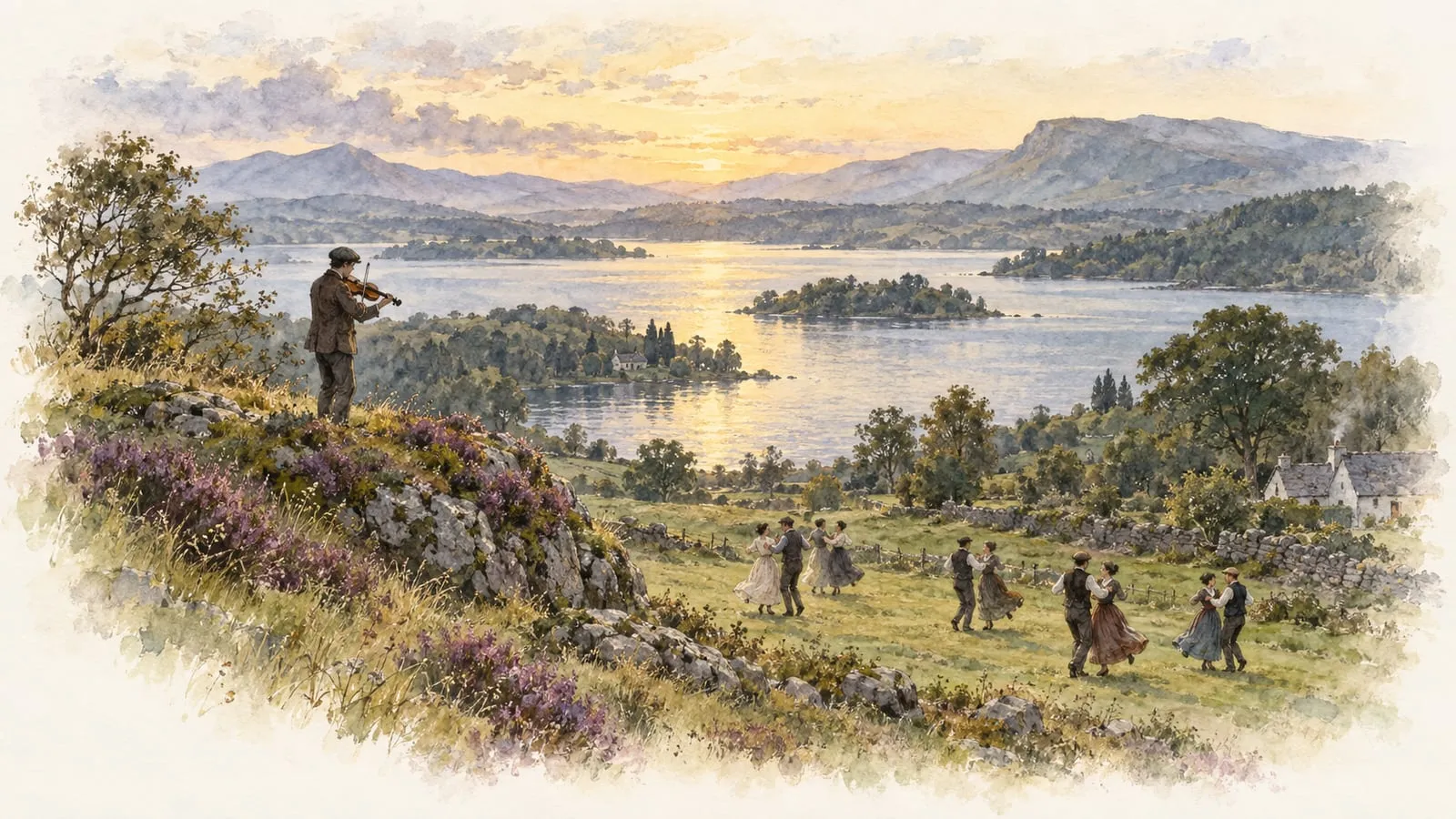
A cheerful vagrant describes his life on the road. People throw a halfpenny into his cap or a bit of salted fish into his dish, and he is "running to Paradise". His brother Mourteen has a dog, a gun and servants but is worn out by beating "his big brawling lout". Rich men grow poor, poor men rich, and clever children grow dull hoarding money. Only the wind, free and unowned, is a friend to his taste. Every stanza ends with the same comfort: in Paradise "the king is but as the beggar".
Lines to remember
For I am running to Paradise;
And there the king is but as the beggar.
That nobody can buy or bind:
Line by line
Lines 1 to 7On the road
Crossing "Windy Gap", he has a halfpenny thrown into his cap. He needs only to wish, and someone gives him "a bit of salted fish". The easy triple rhyme of "wish", "dish" and "fish" matches his easy way of living.
Lines 8 to 14Brother Mourteen
His brother is "worn out" from "skelping his big brawling lout". For all his dog, gun and "serving maid and a serving man", Mourteen leads "A poor life". Property, the beggar implies, brings only trouble.
Lines 15 to 21Fortune's wheel
Poor men become rich and rich men poor again. Children who once "tossed a bare heel" at school have grown dull, their wit turned into savings in "an old sock". Money, not poverty, is what dulls people.
Lines 22 to 28The wind
"The wind is old and still at play", while he must hurry on. He has never found a friend he liked as well as the wind, "That nobody can buy or bind". The wind is his true companion: free, playful and unowned, like himself.
Themes
Freedom
The beggar owns nothing and is tied to nothing, and he is happy. His model is the wind, "That nobody can buy or bind". Everyone else in the poem is burdened by what they have: Mourteen by his household, the grown-up schoolchildren by their savings. His running is joyful, not desperate.
Equality before God
The refrain "And there the king is but as the beggar" promises that in Paradise worldly rank will count for nothing. The beggar's cheerfulness rests on this: whatever others gather here will not matter there. It is an old Christian idea, given a jaunty folk-song rhythm.
Money and dullness
The third stanza shows how fortune changes people. The "darling wit" that once kicked up bare heels has "grown dull" and "filled an old sock full". Getting and keeping money, the poem suggests, costs people their liveliness. Mourteen, with his dog, gun and servants, is proof of the same point: property wears him out.
Context
"Running to Paradise" was collected in Responsibilities (Cuala Press, 1914), in a group of poems about beggars and wanderers. Its tone is lighter than most of the book, but it shares that book's contempt for getting and hoarding money, set here against a beggar's freedom.
Form
Four seven-line stanzas. Each opens with a rhyming couplet, then the refrain "running to Paradise", then three lines on one rhyme ("wish", "dish", "fish"), and closes on the fixed line "And there the king is but as the beggar." The jaunty, song-like pattern and the double refrain give it the feel of a street ballad sung on the move.