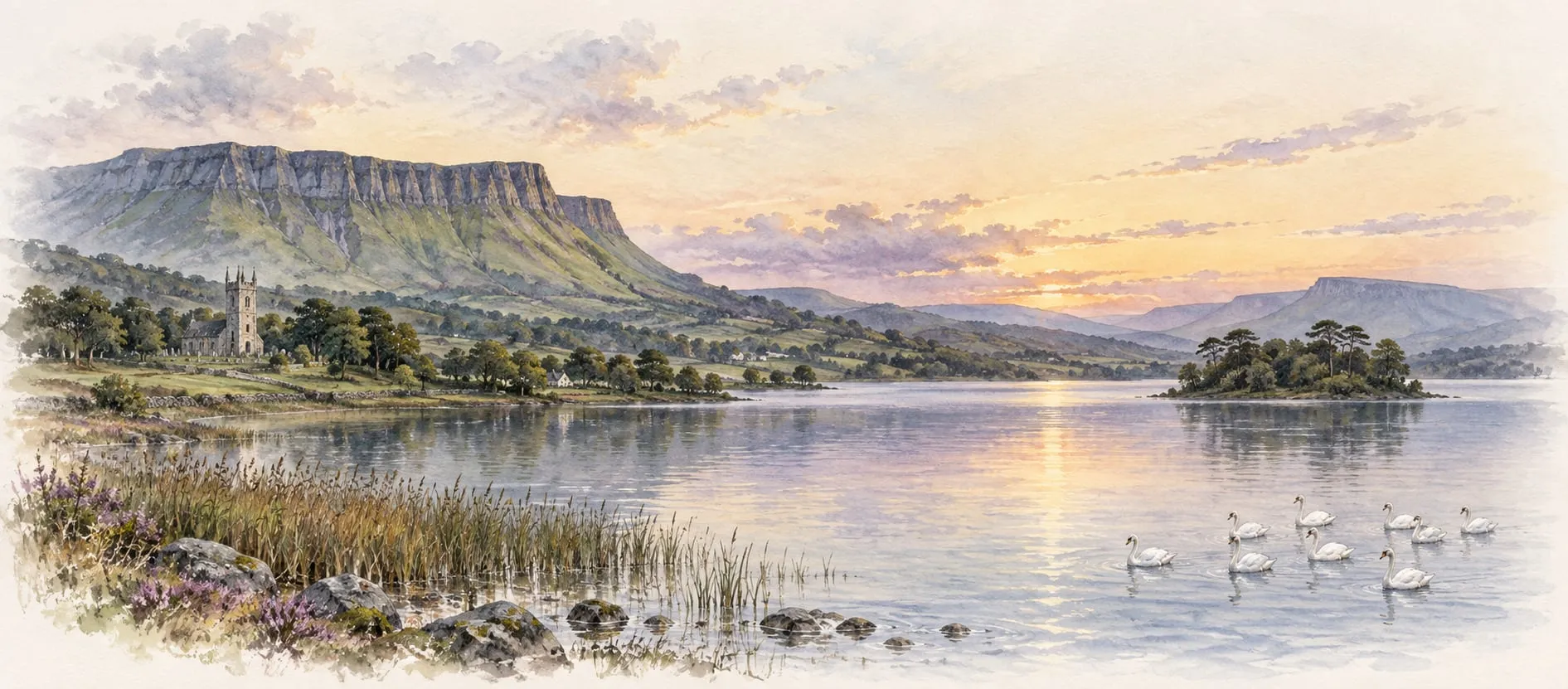
The Three Hermits
Listen
Text: Poetry, by W. B. Yeats (Standard Ebooks, 2024), from the collected editions of 1908 to 1928. Public domain.
In brief
SummaryTwo old hermits argue about the afterlife while the third simply sings.
Three old hermits sit by a cold sea. The first mutters a prayer, the second hunts for a flea, and the third, "Giddy with his hundredth year", sings like a bird. The first worries that he keeps falling asleep when he should pray. The second explains, with great confidence, that holy men who fail are born again and "plagued by crowds". The first moans that they must take "some most fearful shape", but the second mocks him: they come back as a poet, a king or "a witty lovely lady". Meanwhile the third, unnoticed, goes on singing.
Lines to remember
Giddy with his hundredth year,
Sang unnoticed like a bird.
Line by line
Lines 1 to 7Three old men
Each hermit gets a quick sketch: one prays, one "rummaged for a flea", and one, on "a windy stone", sings. The comic detail of the flea sits next to the prayer, so holiness and bodily life share the same shore.
Lines 8 to 12The first hermit's worry
With "the Door of Death" near, the first hermit confesses that three times a day he will "Fall asleep when I should pray". His fear is plain and human: he is too old and tired to be as devout as he means to be.
Lines 13 to 21The second's doctrine
The second hermit lectures him: we get what we have earned. Holy men who fail "Pass the Door of Birth again" and are "plagued by crowds" until they gain "the passion to escape". Rebirth is a punishment for weakness of will.
Lines 22 to 28What they become
The first imagines some "most fearful shape". The second mocks him: a soul that once loved God is reborn only as "a poet or a king / Or a witty lovely lady". The joke is that these grand lives count as a penalty.
Lines 29 to 32The third sings on
The second hermit catches and cracks his flea, and the third, still "Giddy with his hundredth year", sings "unnoticed like a bird". The repeated lines close the poem where it began, with the one hermit who does not argue.
Themes
Rebirth
The hermits discuss reincarnation as if it were settled fact: "the Door of Birth" and "the Door of Death" stand at either end of life. The second hermit's system is neat, with souls given "what we have earned". But his confidence is undercut by the flea he is chasing, and his list of penalties sounds more like a list of rewards.
Song over argument
The third hermit says nothing about doctrine. He simply sings, "unnoticed like a bird", and the poem gives him its opening sketch and its closing lines. The suggestion is that joy in the moment, like a bird's song, may be nearer holiness than anxious prayer or clever theology.
Age and comedy
All three are very old, with death near, yet the poem is funny. The first falls asleep at prayer, the second is busy with "rags and hair" and his flea, and the third is "Giddy". Yeats treats their final years with affection and a light mockery of spiritual self-importance.
Context
"The Three Hermits" was collected in Responsibilities (Cuala Press, 1914), in the run of poems about beggars and holy men that begins with "The Three Beggars". Yeats was interested throughout his life in ideas of reincarnation, and here he handles them with humour, giving the last word not to the theorist but to the singer.
Form
Thirty-two lines of short, seven-syllable lines with a falling rhythm ("Three old hermits took the air"), rhyming alternately throughout ("air", "sea", "prayer", "flea"). The quick, sing-song beat suits the comedy, and lines 6 to 7 return almost unchanged as the last two lines, framing the argument with the third hermit's song.