High Talk
About the text
Yeats first published this poem in 1939. It is out of copyright in Ireland and the EU, but in the United States it stays in copyright until the start of 2035, and this site is served partly from American servers. So for now we give the notes without the full text; it will appear here in 2035.
It begins: Processions that lack high stilts have nothing that catches the eye.
In brief
SummaryA stilt-walker poet stalks on through the terrible novelty of dawn.
The speaker is a stilt-walker in a street procession. Processions without high stilts catch nobody's eye. His great-grandfather had stilts twenty feet high; his own are only fifteen, but nobody modern walks higher, and some rogue has stolen the old pair to patch a fence or a fire. Since ponies, bears and lions make poor shows, and children and women at upper windows want a face at the height of the pane, he takes up chisel and plane to make new stilts. Then he names himself, Malachi Stilt-Jack, and admits it is all metaphor. The poem ends in a vision: a wild goose high in the night, dawn breaking loose, and the stilt-walker striding on as great sea-horses laugh.
Lines to remember
Malachi Stilt-Jack am I, whatever I learned has run wild,
I, through the terrible novelty of light, stalk on, stalk on;
Line by line
Lines 1 to 4Stilts in the family
A procession needs high stilts to catch the eye. His great-grandfather's stilts were twenty feet tall, his are fifteen, yet no one now goes higher. The old pair were stolen by some rogue for firewood or fencing: the inheritance of height has been cheapened and lost.
Lines 5 to 8Chisel and plane
Performing animals make a poor show. Children want Daddy-long-legs on timber toes, and women in upper rooms want a face at their window so they can shriek as they patch old heels. So he sets to work with chisel and plane, making stilts as a poet makes verses.
Lines 9 to 10Malachi Stilt-Jack
He names himself Malachi Stilt-Jack. Whatever he learned has run wild, handed down from collar to collar, from stilt to stilt, from father to child, like a trade passed through a family of travelling performers.
Lines 11 to 14Dawn breaks loose
Then he drops the mask: it is "All metaphor", Malachi and stilts together, the poet's high style. The poem leaps into vision: a barnacle goose far up in the night, night splitting, dawn breaking loose. Through the "terrible novelty of light" he stalks on, while great sea-horses bare their teeth and laugh.
Themes
Art as performance
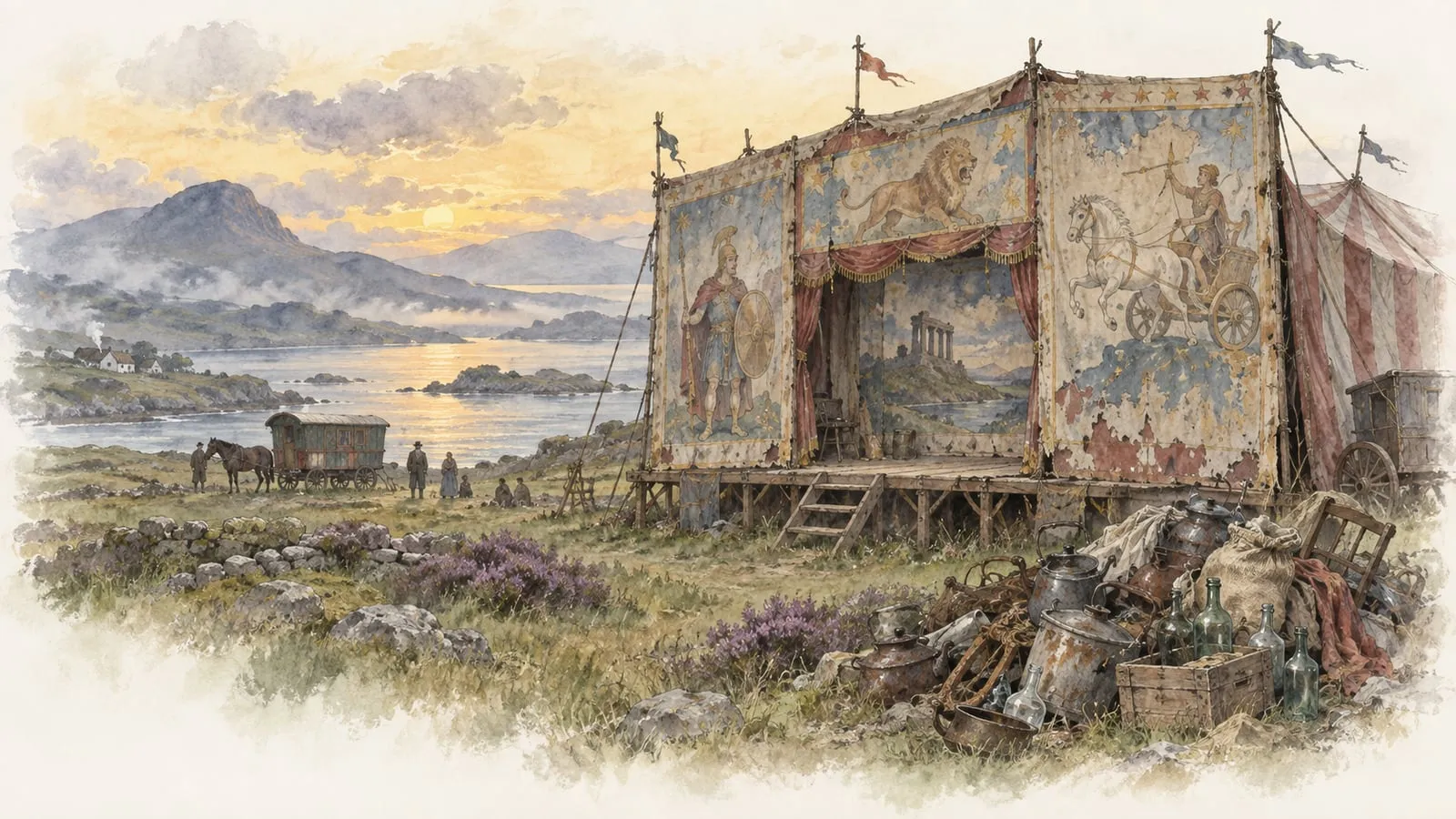
The stilts stand for the heightened, theatrical style of poetry: "high talk". People want spectacle, a face at the upper window, not piebald ponies. Yeats presents the poet as a street entertainer, half comic, who must build his own stilts with chisel and plane to lift himself above the crowd.
Decline and inheritance
The great-grandfather's stilts were higher than his, and a rogue has broken them up for a fence or a fire. Yeats often felt that his age had shrunk from the greatness of earlier generations. Still, the craft passes "from father to child", and the speaker goes on making.
Facing the new
The ending turns the comic show into something frightening and exhilarating. Dawn breaks loose, the light is a "terrible novelty", and the sea-horses laugh. The old stilt-walker does not retreat; he stalks on into a world he cannot control. The comic persona has become a figure of courage.
Context
The poem was first published in Last Poems and Two Plays (Cuala Press, Dublin, 1939). Like "The Circus Animals' Desertion", from the same period, it looks at Yeats's own art as a kind of show, with its props, its performers and its crowd.
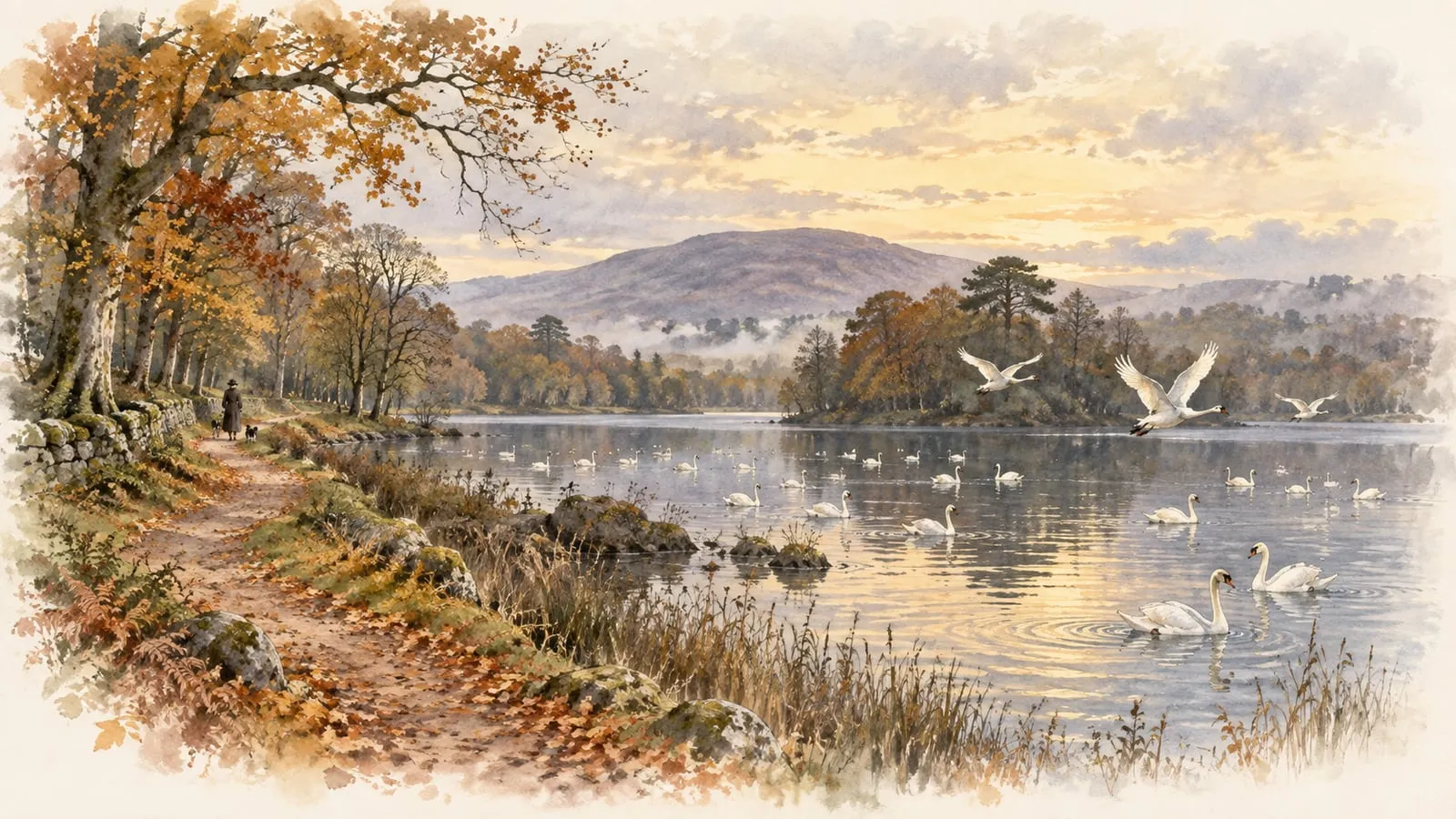
The barnacle goose was once believed to grow from barnacles on driftwood rather than from an egg, which makes it a fitting bird for a poem about strange births. The "sea-horses" are probably the white-crested breakers that people call white horses, seen at the edge of the dawn.
Form
Fourteen very long lines of six or seven beats in rhyming couplets (eye and high, higher and fire, wild and child, goose and loose), set as an eight-line and a six-line verse paragraph. Lumbering, comic description gives way to a sudden vision, and the long lines stride like the stilts themselves.