He thinks of his Past Greatness when a Part of the Constellations of Heaven
Earlier titled "Mongan thinks of his past Greatness", "He Thinks of His Past Greatness When a Part of the Constellation of Heaven"
Listen
Text: Poetry, by W. B. Yeats (Standard Ebooks, 2024), from the collected editions of 1908 to 1928. Public domain.
In brief
SummaryA man who remembers many past lives still cannot win his love.
The speaker has drunk ale from "the Country of the Young", the Irish otherworld, and now knows all things, which makes him weep. He remembers being a hazel tree with the Pole Star and the Plough hanging in its leaves, then a rush trodden by horses, then a man. As a man he knows one thing above all: he will not lie with the woman he loves until he dies. The last lines turn to the birds and beasts, whose mating cries he can hardly bear. All his cosmic knowledge cannot ease an ordinary grief.
Lines to remember
I have drunk ale from the Country of the Young
And weep because I know all things now:
Line by line
Lines 1 to 2All knowledge
The poem opens with a magic drink: "ale from the Country of the Young", the land of lasting youth in Irish legend. It gives him total knowledge, and the result is sorrow: he weeps "because I know all things now".
Lines 3 to 7Past lives
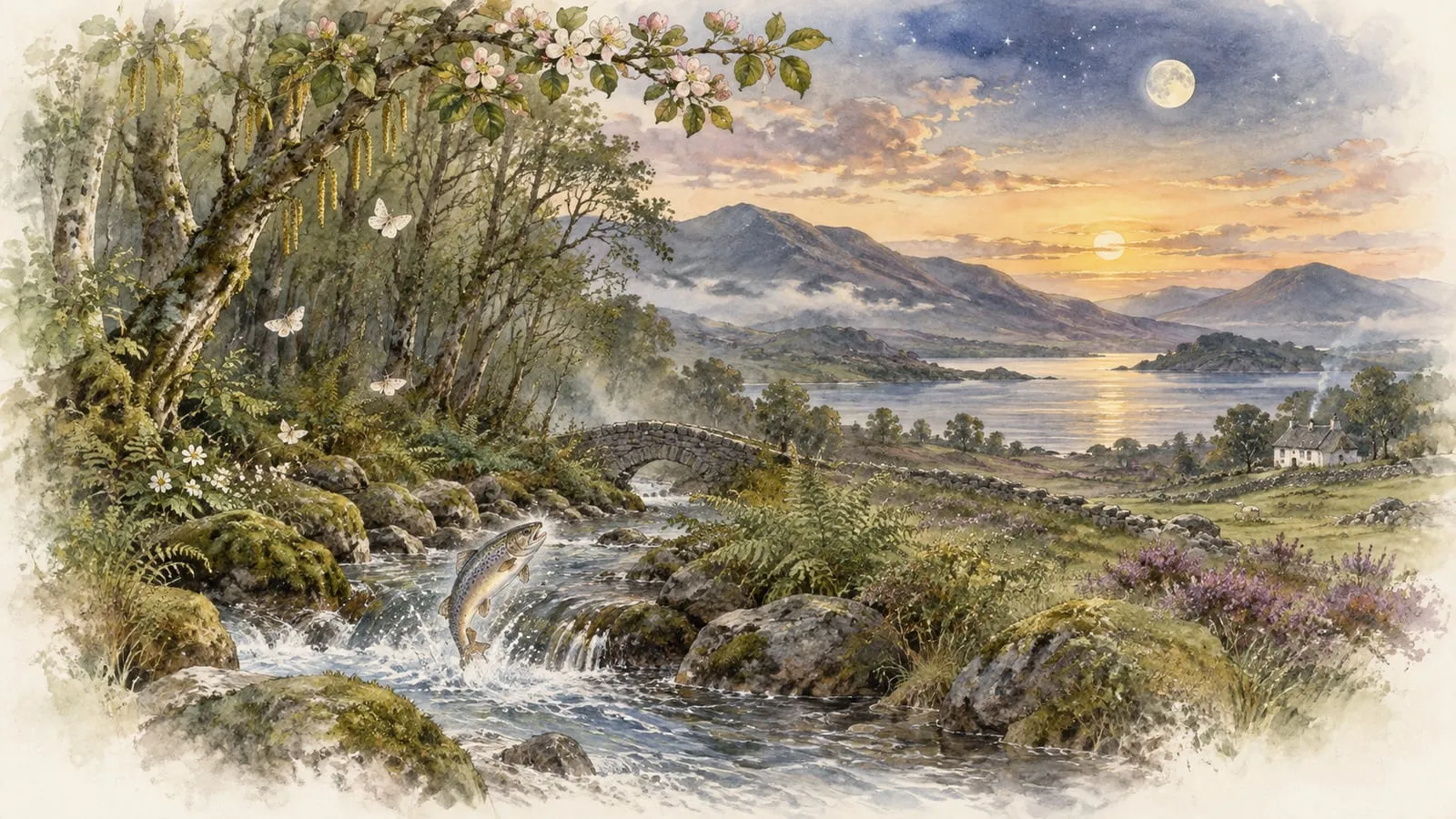
He recalls his earlier forms. Once he was a hazel tree, with "The Pilot Star and the Crooked Plough" hung among its leaves "in times out of mind"; then "a rush that horses tread"; then "a man, a hater of the wind". Each life is smaller and more exposed than the last.
Lines 8 to 10The one thing he knows
Of "all things", the man knows one alone: that his head "Would not lie on the breast" of the woman he loves "until he dies". Line 8, crowded with commas, stumbles and slows towards the painful fact.
Lines 11 to 12Animal cries
He turns to the "beast of the wilderness, bird of the air" and asks if he must endure their "amorous cries". The creatures mate freely; he, who once held the stars in his branches, cannot.
Themes
Unrequited love
The whole cosmic history leads to one plain sorrow. He has known all things and been part of the heavens, yet as a man he is shut out from love. The contrast with the animals in the last lines sharpens it: love that comes easily to "beast" and "bird" is denied to the one who knows most.
Knowledge and grief
The first lines reverse the usual hope that wisdom brings peace: he weeps "because I know all things now". His knowledge includes the certainty that his love will fail. Seeing clearly across many lives, the poem suggests, only makes the loss plainer.
Transformation
The hazel, the rush and the man follow the old idea that a soul passes through many shapes. In Irish myth the hazel is a tree of wisdom, fitting for a speaker who knows all things. Each change brings him lower, from the stars in his branches to the trampled rush, and finally to a man who hates the wind.
Context
In The Wind Among the Reeds (1899) the poem was titled "Mongan thinks of his past Greatness". Mongan is a king of Irish legend said to remember his earlier lives, which explains the poem's chain of transformations. Later titles dropped his name and added "when a Part of the Constellations of Heaven"; Standard Ebooks prints "Constellation" in the singular, following the 1908 text.
Form
Twelve lines in three linked quatrains rhymed abab ("Young" and "hung", "now" and "Plough", "mind" and "wind", "hair" and "air"), with lines of four to six beats. Colons end each of the early sentences, so the lives are recited like a list, until the question at the end breaks the pattern.
Titled 'Mongan thinks of his past Greatness' in 1899. Standard Ebooks prints 'Constellation' (singular), following 1908.