Fallen Majesty
Listen
Text: Poetry, by W. B. Yeats (Standard Ebooks, 2024), from the collected editions of 1908 to 1928. Public domain.
In brief
SummaryA poet records the vanished glory of a once-celebrated woman.
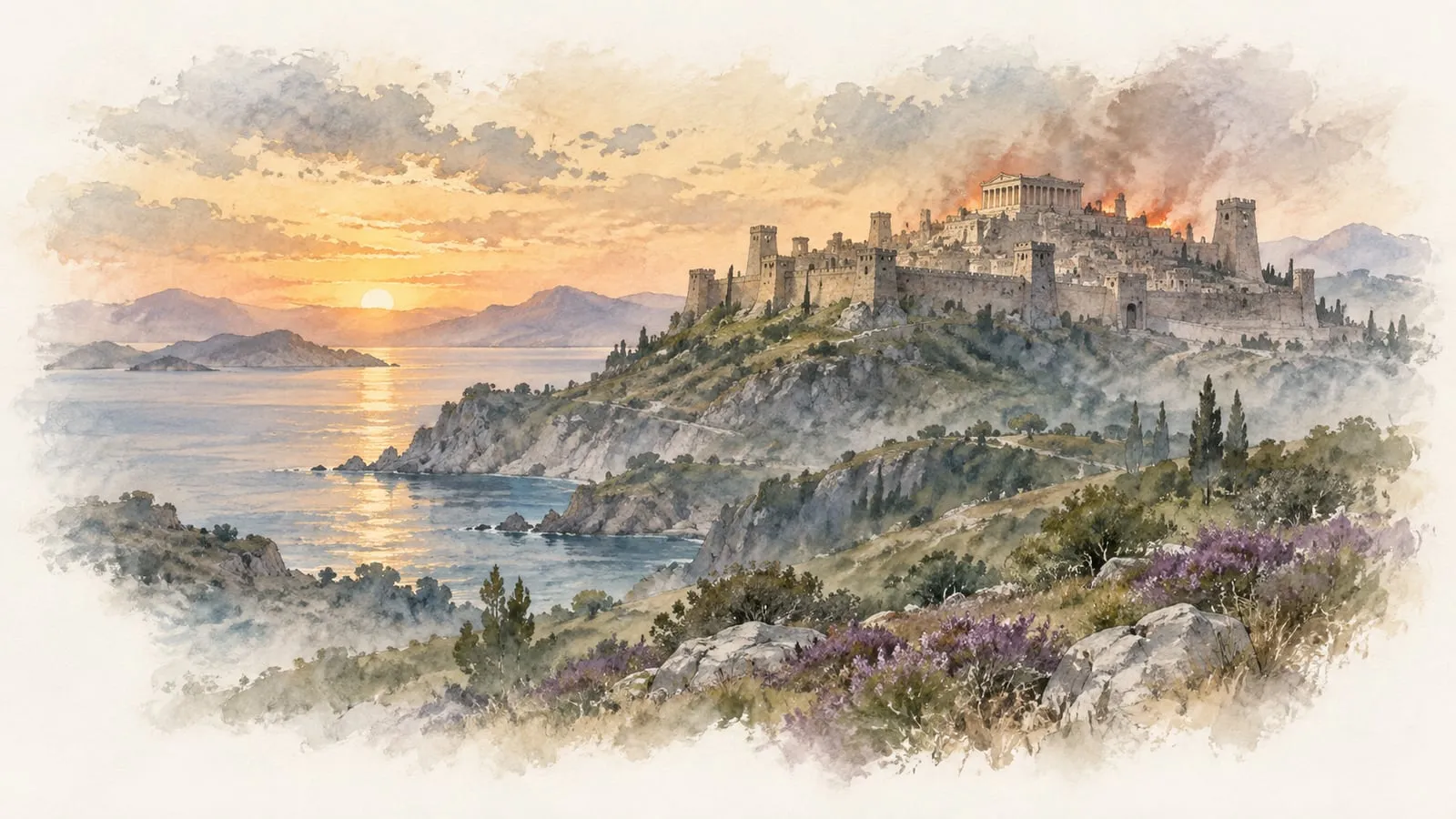
Crowds once gathered whenever she showed her face, and even old men's eyes grew dim at the sight of her. Now only the poet's hand records what is gone, like the last loyal courtier of a fallen king, babbling among gypsies. Her features and her kind, laughing heart remain, but the majesty has passed. A day will come when a crowd walks the same street without knowing that something once walked there "that seemed a burning cloud".
Lines to remember
Babbling of fallen majesty, records what's gone.
Whereon a thing once walked that seemed a burning cloud.
Line by line
Lines 1 to 4The last courtier
The first stanza contrasts her past fame with his present task. Once crowds gathered; now "this hand alone" keeps the record. He pictures himself as "some last courtier at a gypsy camping place", loyal to a court that no longer exists, talking to people who do not care.
Lines 5 to 8A burning cloud
Her "lineaments" and a heart "that laughter has made sweet" survive, but the repeated "I record what's gone" insists that something greater has been lost. The poem ends looking forward to a future crowd, ignorant of the street's history, and lifts her into the strange, fiery image of "a burning cloud".
Themes
Beauty and time
The poem sets "once" against "now". The crowds, the dimmed eyes of old men and the "burning cloud" belong to the past; what remains is gentler, a sweet heart and familiar features. The speaker does not mourn her ageing so much as the loss of a presence that seemed more than human.
The poet as witness
"This hand alone" and "I record what's gone" make the poet the only keeper of memory. He admits the role is half absurd, a courtier "Babbling of fallen majesty", yet the poem itself is the record, meant to outlast the crowd that will forget.
Context
The poem was collected in Responsibilities (Cuala Press, 1914). It is usually read as a poem about Maud Gonne, whose beauty and public speeches drew large crowds in her youth, and who was by then in her late forties. It belongs with other poems of the period that place her among legendary beauties, such as "No Second Troy".
Form
Two quatrains of long, six-beat lines rhymed ABAB ("face" and "place", "street" and "cloud" answered by "crowd"). The sentences run across line endings, and the phrase "what's gone" closes line 4 and returns mid-line in line 6, like a refrain the poet cannot stop repeating.