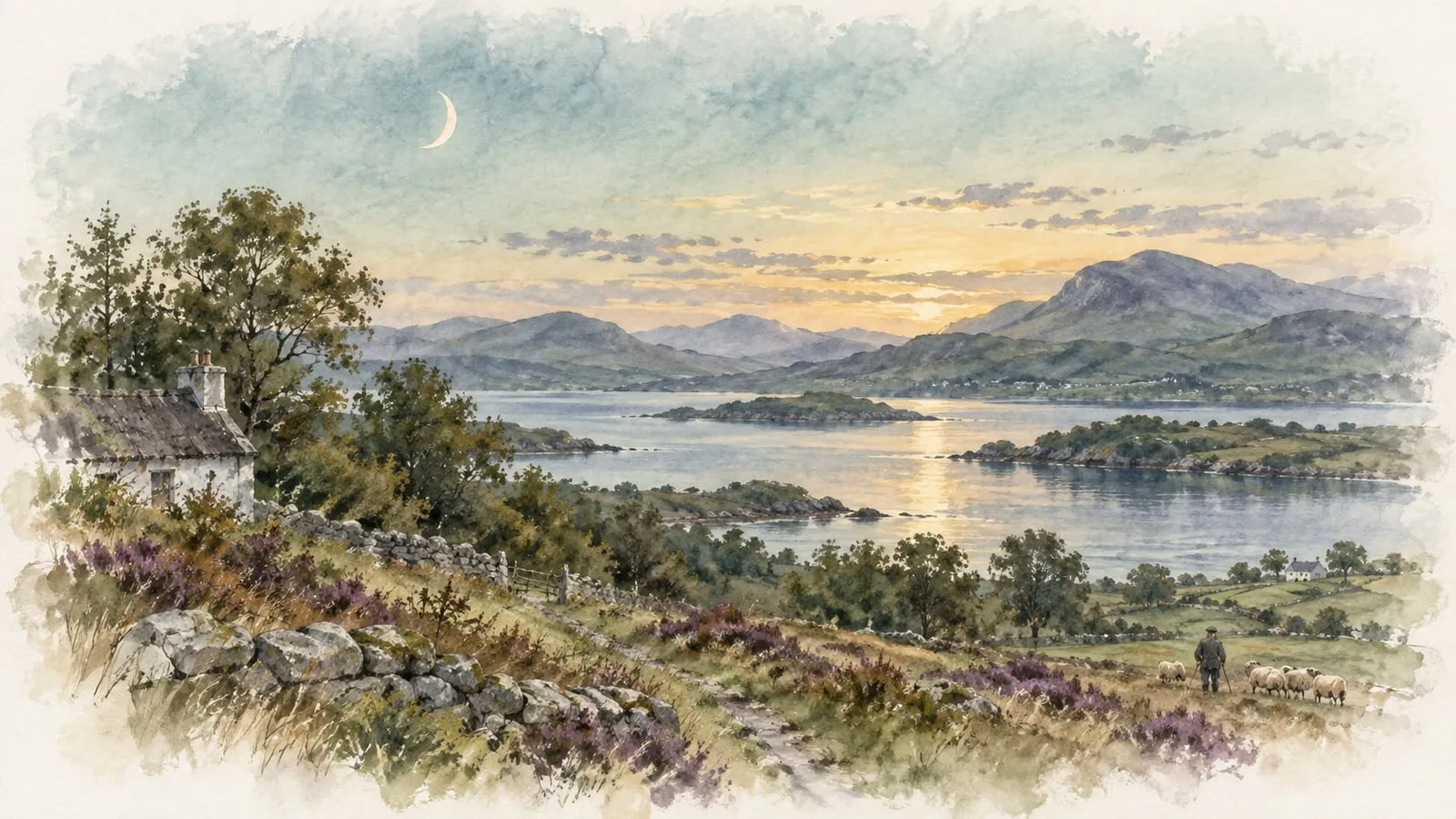
A Memory of Youth
Listen
Text: Poetry, by W. B. Yeats (Standard Ebooks, 2024), from the collected editions of 1908 to 1928. Public domain.
In brief
SummaryA lover remembers an evening when love nearly died and was rescued.
The speaker looks back on an evening with the woman he loved. He had wit, wisdom and her praise, yet a cold cloud from the north hid "love's moon". He praised her body and mind until her eyes shone and her cheeks reddened, but for all that praise the two of them saw "Nothing but darkness overhead". They sat in silence, both sure that "even the best of love must die". Then, at the cry of "a most ridiculous little bird", Love tore the moon free of the clouds. The poem is rueful and a little comic: love survives by luck, not by eloquence.
Lines to remember
Suddenly hid love's moon away.
That even the best of love must die,
Of a most ridiculous little bird
Line by line
Lines 1 to 7A cloud over the moon
Everything seemed to be going well. The evening passed "as at a play", and he had wisdom, "mother wit" and her praise. Yet a cloud "from the cut-throat north" suddenly hid "love's moon". The weather stands for a mood that neither of them can explain or control.
Lines 8 to 14Praise is not enough
He praises her body and mind, and she responds: pride brightens her eyes, pleasure reddens her cheeks, vanity lightens her step. The list of rising feelings builds hope, but the stanza ends flatly on "Nothing but darkness overhead". Flattery can please her without bringing love back.
Lines 15 to 21Saved by a bird
They sit "as silent as a stone", each knowing that love can die. It would have been "savagely undone" if Love had not heard the cry of "a most ridiculous little bird" and torn "his marvellous moon" from the clouds. The rescue is sudden, absurd and joyful.
Themes
The fragility of love
Love here can vanish without cause. A cloud "Suddenly hid love's moon away", and by the last stanza both lovers know "That even the best of love must die". The poem refuses to blame either of them. Love's weather simply turns, and the speaker's skill with words counts for nothing against it.
Chance and grace
The recovery is as unexplained as the loss. Not his praise but "the cry / Of a most ridiculous little bird" brings the moon back. Calling the bird "ridiculous" keeps the ending wry rather than sentimental: the rescue of love is a gift, and a slightly comic one.
Context
The poem was collected in Responsibilities, published by the Cuala Press in May 1914. It sits in a group of poems in that book that look back on love from middle age, beside "Fallen Majesty" and "Friends". The woman is not named; the poem is usually read as a memory of Maud Gonne, whom Yeats loved for many years without return.
Form
Three seven-line stanzas of four-beat lines, each rhymed ABCACBA, so the first and last lines frame the stanza ("play" and "away", "said" and "overhead"). In the last stanza the frame rhyme loosens into "stone", "undone" and "moon", a slight wobble that suits a love only just rescued.