Whence had they Come?
About the text
Yeats first published this poem in 1934. It is out of copyright in Ireland and the EU, but in the United States it stays in copyright until the start of 2030, and this site is served partly from American servers. So for now we give the notes without the full text; it will appear here in 2030.
It begins: Eternity is passion, girl or boy
In brief
SummaryLovers, ecstatics and history itself act out a drama they cannot see.
Passion, the poem begins, is a glimpse of eternity: young lovers cry "for ever" at the height of joy, then wake with no idea what character spoke through them. An exultant man sings sentences he never thought; a flagellant whips himself without knowing who wrote his part or made the lash. Behind them all is a hidden dramatist. The poem ends by asking where the power came from that overthrew cold Rome, and what sacred drama heaved through the body of the woman who conceived Charlemagne.
Lines to remember
Eternity is passion, girl or boy
Line by line
Lines 1 to 4For ever and for ever
Eternity is passion. A girl or boy at the onset of sexual joy cries out that this will last for ever, then wakes not knowing what characters in what play were speaking through them.
Lines 5 to 8The unseen dramatist
A man driven by passion sings out sentences he never thought. A flagellant lashes his own body, obedient to a dramatist he cannot name. People in ecstasy are actors speaking lines written elsewhere.
Lines 9 to 12Rome and Charlemagne
Who made the whip? The questions widen to history: where did the hand and lash come from that beat down frigid Rome? What sacred drama moved through a woman's body when Charlemagne, who would transform the world, was conceived? Great historical change begins, like personal ecstasy, in passion.
Themes
Passion and eternity
The opening words make a bold claim: eternity is passion. At the moment of greatest intensity, lovers touch something beyond time, which is why they cry "for ever". Afterwards they cannot say what happened. The poem treats sexual and religious ecstasy as the same kind of possession.
History as drama
Yeats imagines history as a play whose author is hidden. Lovers, singers, flagellants, the destroyers of Rome and the parents of Charlemagne all act out parts they do not understand. A new age, in his view, is conceived like a child, in a passion driven by forces beyond the individual.
Context
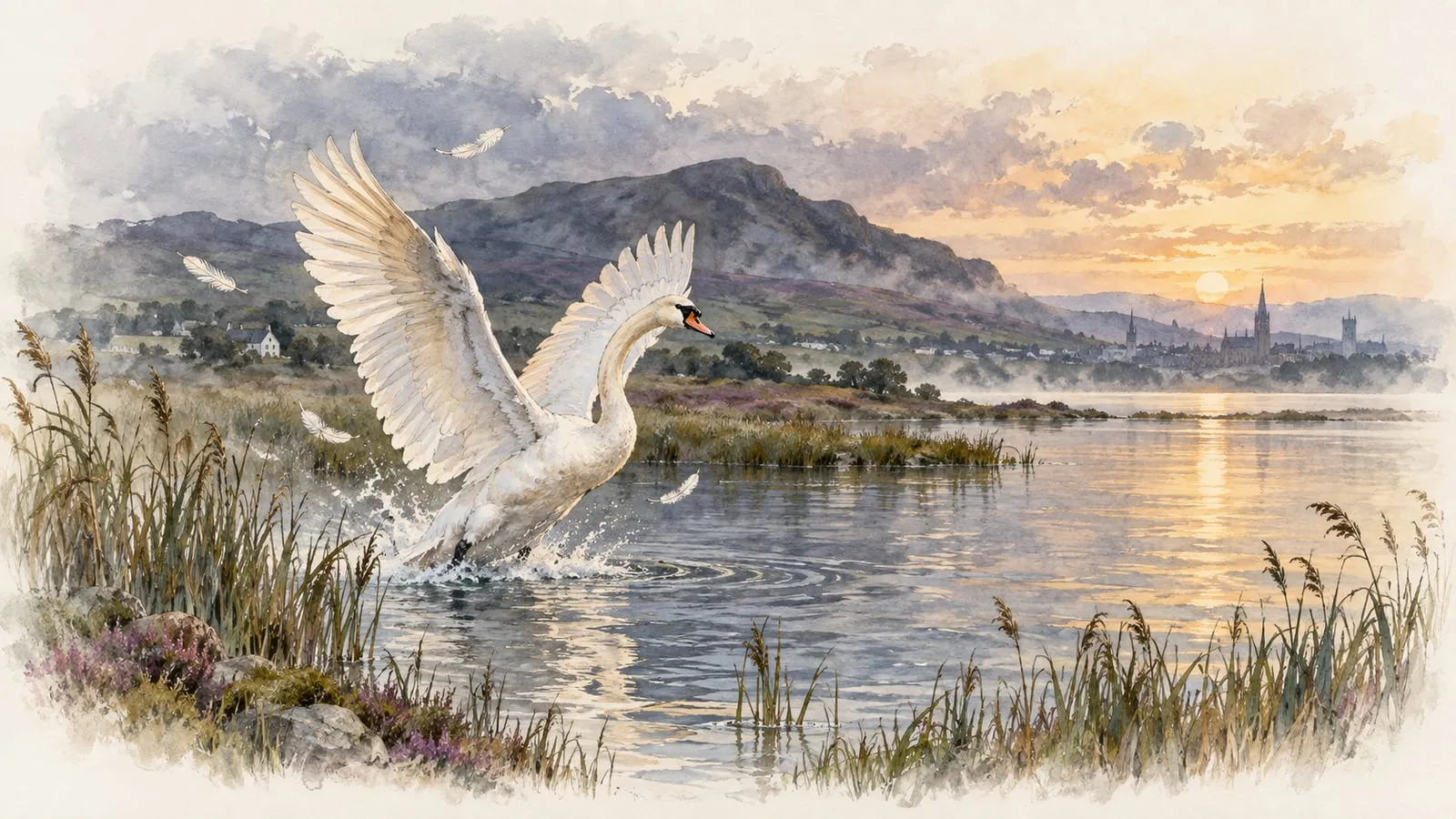
The poem is the eighth of the Supernatural Songs, which first appeared in a book in The King of the Great Clock Tower, Commentaries and Poems (Cuala Press, 1934), and were collected in A Full Moon in March (Macmillan, 1935). It fits Yeats's cyclical view of history in A Vision, where each new era is born through an annunciation or conception, as in "Leda and the Swan". Charlemagne was crowned emperor in 800 and ruled much of western Europe.
Form
Twelve five-beat lines in rhyming couplets, run together as one continuous argument that turns into questions at the ninth line. The theatrical words ("Dramatis personae", "dramatist", "sacred drama") build the poem's central metaphor, and the rhyme of "come" with "Rome" lands the shift from private to public history.