The Mountain Tomb
Listen
Text: Poetry, by W. B. Yeats (Standard Ebooks, 2024), from the collected editions of 1908 to 1928. Public domain.
In brief
SummaryRevellers dance in vain above the sleeping founder of the Rosicrucians.
The poem calls for a celebration: wine, dancing, roses, fiddle and clarinet, no foot still and no mouth idle from kissing. Yet each stanza ends with the same line: "Our Father Rosicross is in his tomb." Outside, the waterfall smokes on the mountainside. In the last stanza the revelry is dismissed, "In vain, in vain": an everlasting candle burns in the tomb, and all wisdom is shut into the founder's "onyx eyes". The final refrain changes one word, from "is" to "sleeps", as if the hidden wisdom is only resting.
Lines to remember
Our Father Rosicross is in his tomb.
All wisdom shut into his onyx eyes
Line by line
Lines 1 to 4Wine and roses
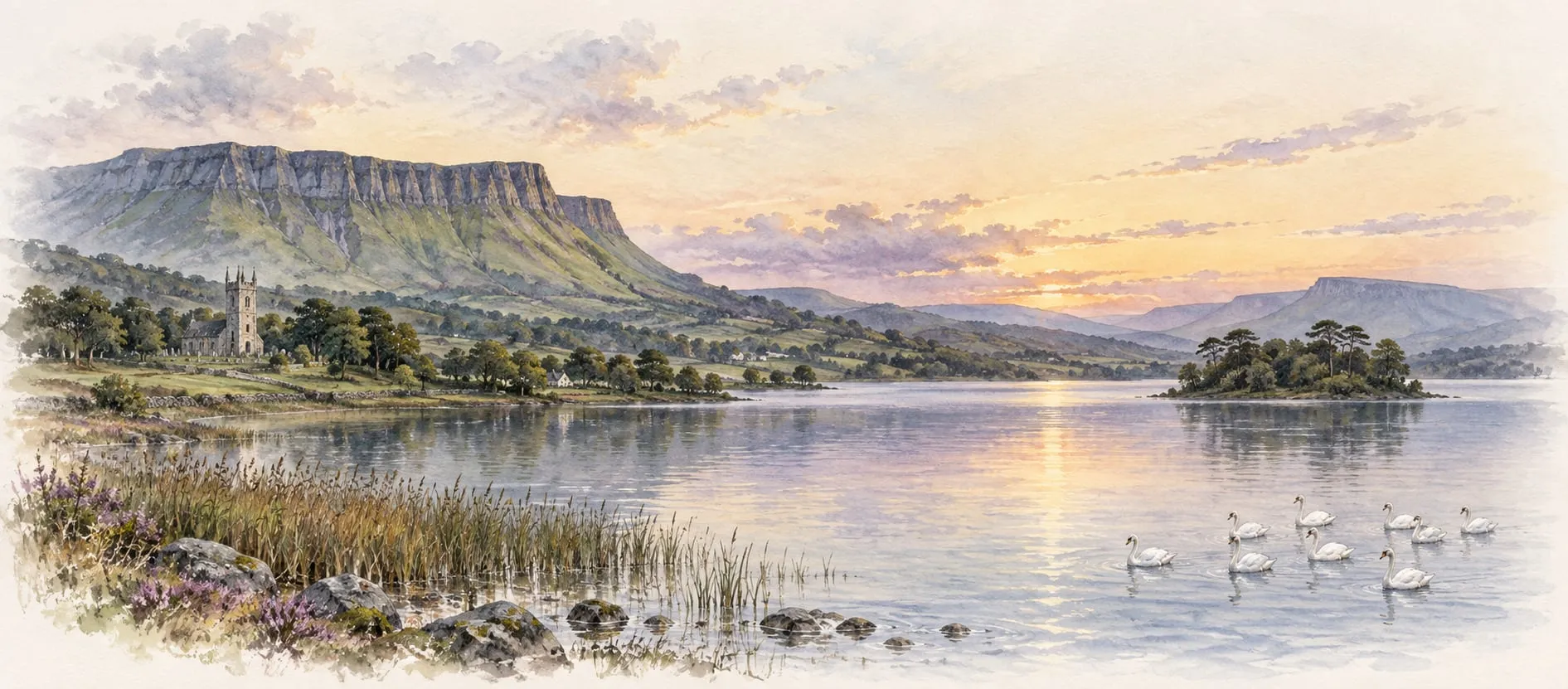
The speaker calls for wine and dance "if Manhood still have pride", and roses "if the rose be yet in bloom". The conditions hint at doubt. Outside, "The cataract smokes upon the mountain side", and the refrain fixes the reason: the master lies entombed.
Lines 5 to 8Music in the room
"Pull down the blinds" shuts the world out and the party in. Fiddle and "clarionet" should leave "no foot silent" and no mouth "from kissing" or "from wine unwet". The revelry grows louder, and the refrain returns unchanged.
Lines 9 to 12In vain
"In vain, in vain": the noise cannot reach the tomb. The waterfall "still cries", and "The everlasting taper lights the gloom". All wisdom is "shut into his onyx eyes", and the refrain now says the founder "sleeps".
Themes
Hidden wisdom
Father Rosicross, the legendary founder of the Rosicrucians, lies with "All wisdom shut into his onyx eyes". The wisdom is sealed away, lit by "The everlasting taper" but unreachable. The change from "is in his tomb" to "sleeps in his tomb" leaves open the hope that it may one day wake.
Revelry and loss
The celebration is urgent and physical: wine, roses, dancing feet, kissing mouths. But it is a way of filling the silence left by the master's death, and the last stanza calls it "In vain". Joy cannot replace what has been lost, only distract from it for a while.
Nature's voice
The cataract frames the poem. In the first stanza it "smokes upon the mountain side"; in the last it "still cries". It goes on outside while the revellers pull down the blinds, like a grief or a truth that persists whatever people do indoors.
Context
"The Mountain Tomb" was collected in Responsibilities (Cuala Press, 1914). Father Rosicross is Christian Rosencreutz, the legendary founder of the Rosicrucian brotherhood. In the legend his tomb was opened long after his death and found lit by an ever-burning lamp, with his body uncorrupted.
Yeats was a member of the Hermetic Order of the Golden Dawn, an occult society steeped in Rosicrucian symbolism, from 1890. The rose, a central symbol of his early poems, is linked to the same tradition, and here it appears again in line 2.
Form
Three quatrains of iambic pentameter. The first and third lines of each rhyme ("pride", "side"), and every second line rhymes with "tomb" ("bloom", "room", "gloom"), so the refrain's word sounds through the whole poem. The refrain changes only once, from "is" to "sleeps", and that small shift carries the ending.