A Song of the Rosy Cross
Text: Poetry, by W. B. Yeats (Standard Ebooks, 2024), from the collected editions of 1908 to 1928. Public domain.
In brief
SummaryOne person is given the Rose, the speaker only the Cross.
God, "He who measures gain and loss", has divided fortune unequally: to the person addressed he gave the Rose, to the speaker "alone the Cross". One path winds through a wood of dew and moss where the red rose blooms; the speaker's lies where "waters brood and toss". Yet he has "one joy", kept hidden. The poem does not say what it is, and circles back to its first three lines as if repeating a vow. The symbols are simple: the Rose stands for beauty and happiness, the Cross for suffering.
Lines to remember
He who measures gain and loss,
Gave to me alone the Cross;
Line by line
Lines 1 to 3Rose and Cross
God is described as "He who measures gain and loss", a kind of divine accountant. He gave the person addressed "the Rose" and the speaker "alone the Cross": beauty and joy for one, suffering for the other.
Lines 4 to 7Two paths
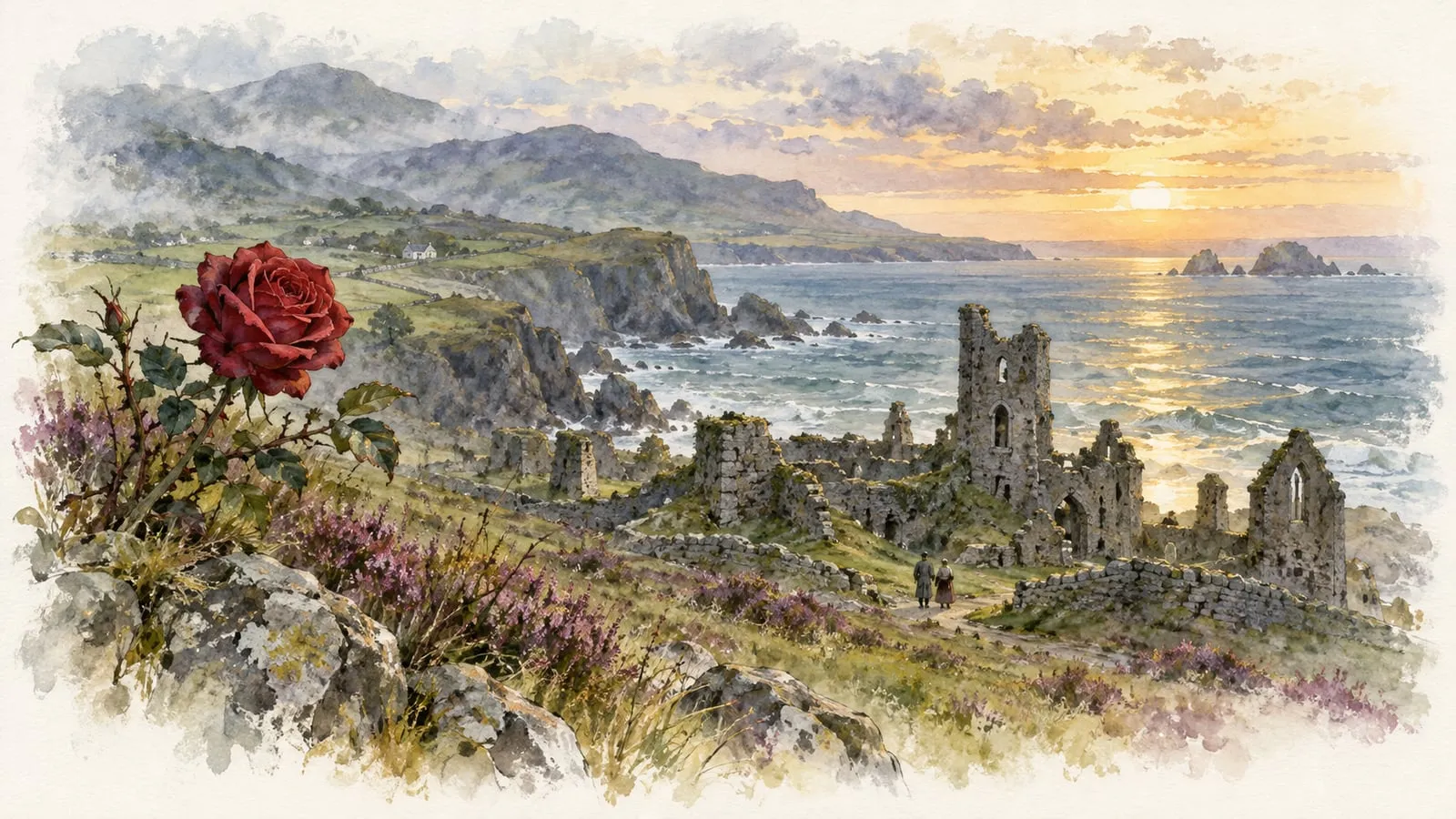
Their lives go different ways. One path winds through "a wood of dew and moss" where "the blood-red blossom blows"; the speaker's goes where "waters brood and toss", a restless, stormy place. The rose's colour, blood-red, quietly links it to the suffering of the cross.
Lines 8 to 11The hidden joy
"Yet one joy have I, hid close": he does not say what it is. Instead the opening lines return. The repetition hints that the secret joy may lie in the pairing itself, the rose and the cross belonging together.
Themes
Joy and suffering
The poem divides life into two lots, the Rose and the Cross, handed out by the one who "measures gain and loss". The speaker accepts the harder share. His "one joy", kept "hid close", hints that suffering has its own secret reward, and the circular shape of the poem keeps the two symbols bound together.
Symbol
A rose joined to a cross is the emblem of the Rosicrucians, a legendary brotherhood of Christian mystics. Here the emblem is split in two and shared between two people, so that the full symbol exists only when their fates are taken together. The title, a "Rosy Cross", names the union the lines keep apart.
Context
This is one of the early poems Yeats later left out of his collections. The rose was the central symbol of his poetry in the early 1890s, standing for beauty, Ireland and spiritual love, and he gathered a group of lyrics under the title "The Rose". His interest in the Rose-Cross came from his occult studies: he was a member of the Hermetic Order of the Golden Dawn, whose rituals used the rosy cross.
Form
Eleven short lines in a quick seven-syllable rhythm, using only two rhyme sounds, alternating "-oss" and "-ose" ("loss", "Rose", "Cross", "blows"). The last three lines repeat the first three almost exactly, so the poem ends where it began, like a song returning to its refrain.