The Curse of Cromwell
About the text
Yeats first published this poem in 1938. It is out of copyright in Ireland and the EU, but in the United States it stays in copyright until the start of 2034, and this site is served partly from American servers. So for now we give the notes without the full text; it will appear here in 2034.
It begins: You ask what I have found, and far and wide I go
In brief
SummaryA wandering poet mourns the old Irish order that Cromwell swept away.
A poet who has wandered far and wide reports what he has found: nothing but Cromwell's house and Cromwell's murderous crew. The lovers, dancers and swordsmen are buried, and only an old beggar keeps his pride, whose family served their lords since before Christ. Neighbourly ease has gone; money rules, men climb on each other's backs, and poets count for nothing. Yet he holds a secret knowledge that gnaws at him: the great dead still keep company, still pay for a poem and hear the fiddle, and he is still their servant. In a dream he finds a great house lit up and full of friends, then wakes in a ruin with only dogs and horses to talk to.
Lines to remember
And we and all the Muses are things of no account.
Line by line
Lines 1 to 8Cromwell's crew
Asked what he has found on his travels, the poet answers bitterly: only Cromwell's heirs. The lovers, dancers, swordsmen and horsemen are beaten into the clay. An old beggar survives with his pride, his family having served theirs since before Christ. The refrain shrugs: what is left to say?
Lines 9 to 16Money's rant
Neighbourly contentment and easy talk are gone, and money rules. Everyone climbing up must climb on his neighbour, and poets and the Muses are "things of no account". The new men have their own schooling, but the poet sets his knowledge, of how to die well, above theirs.
Lines 17 to 24Another knowledge
He has a different knowledge that eats at his heart, like the fox gnawing the Spartan boy in the old fable. It proves that things can both be and not be: the dead swordsmen and ladies still keep company, pay the poet and hear the fiddle, and he is still their servant.
Lines 25 to 32The house in the night
He comes upon a great house in the night, every window lit, and all his friends there to welcome him. Then he wakes in an old ruin with the wind howling through it. Now he must walk among dogs and horses, the only creatures who understand his talk.
Themes
The lost Gaelic order
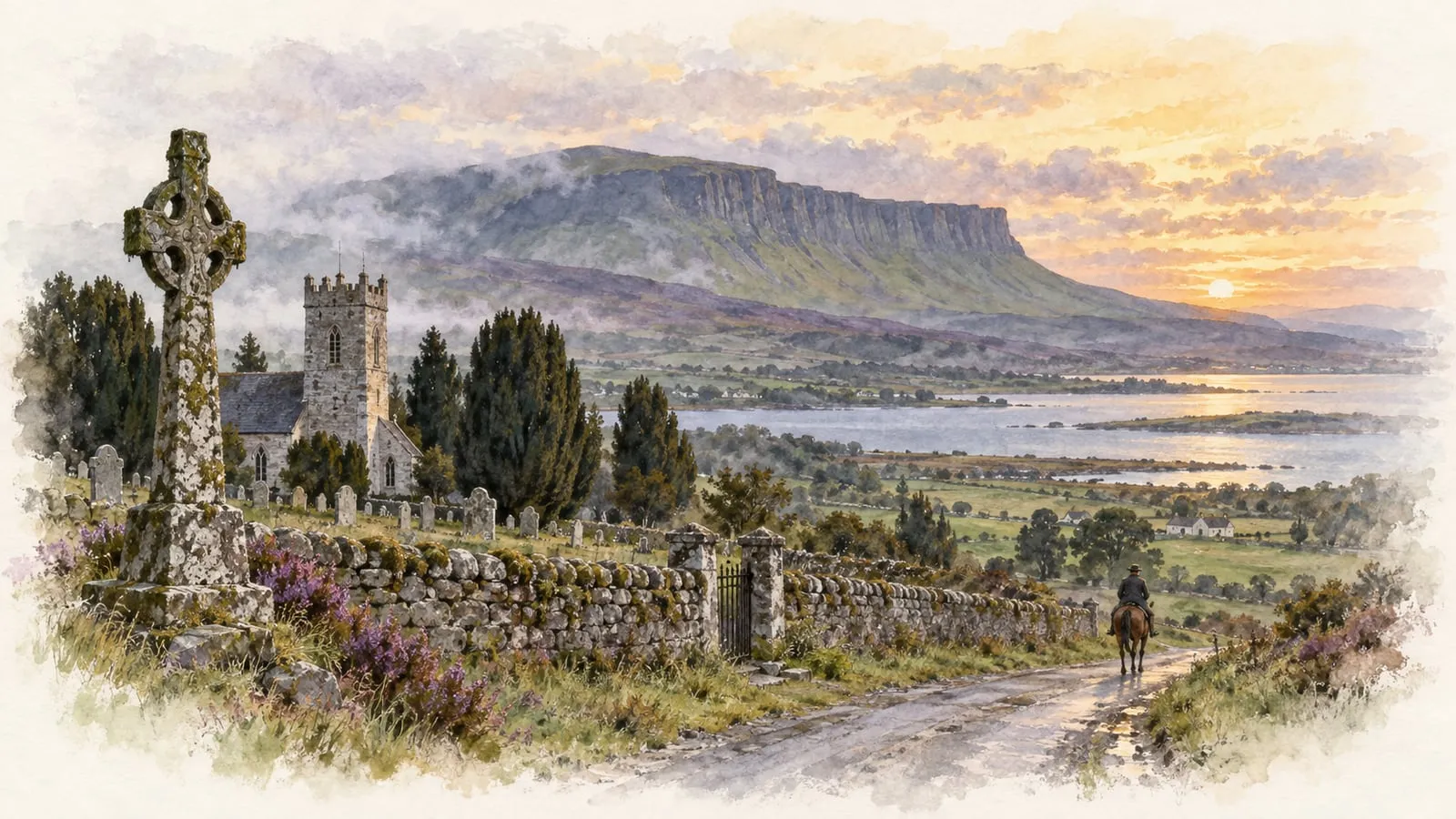
Cromwell stands for the conquest that destroyed the old Irish aristocracy and the world of poets, fiddlers and patrons it supported. The speaker belongs to that world. His lament is for a way of life in which a poet had a place, a lord and a hall, and that now survives only in ruins and in dreams.
Money and the modern world
The second stanza is an attack on the society that replaced the old order, ruled by money and ambition, with no room for poetry. The complaint that the Muses are "of no account" links the seventeenth-century conquest with Yeats's own impatience with modern commercial Ireland.
Loyalty to the dead
The poet remains a servant of lords who are "all underground". His loyalty is to memory and imagination, and the dream of the lit house shows how vivid that loyalty is. Waking to the ruin is the price of it, and his only companions are animals.
Context
The poem was first published in New Poems (Cuala Press, Dublin, May 1938). Oliver Cromwell's campaign in Ireland in 1649 and 1650 was followed by the confiscation of Catholic land and the ruin of many old Gaelic and Norman families. The speaker's voice recalls the Irish-language poets of the seventeenth and eighteenth centuries, such as Egan O'Rahilly, who lamented the fall of the families that had kept them.
The fable in the third stanza is the ancient story of a Spartan boy who hid a stolen fox under his cloak and let it gnaw him rather than be found out. The last image, of a man left to talk only to dogs and horses, shows how completely his world has vanished.
Form
Four eight-line stanzas: six long lines of six or seven beats in rhymed couplets, some loose ("go" and "crew"), then a two-line refrain. The long, swinging lines sound like a street ballad or a translation from Irish song, and the weary refrain turns every stanza's grief into a shrug.