The Black Tower
About the text
Yeats first published this poem in 1939. It is out of copyright in Ireland and the EU, but in the United States it stays in copyright until the start of 2035, and this site is served partly from American servers. So for now we give the notes without the full text; it will appear here in 2035.
It begins: Say that the men of the old black tower
In brief
SummaryOath-bound soldiers guard an old tower for a king who may never return.
Yeats's last poem is a song of stubborn loyalty. The men of an old black tower are poor now, yet they lack nothing a soldier needs, because they are bound by an oath. Banners arrive to bribe or threaten them, or to whisper that only a fool would care who rules once his own rightful king is forgotten. The men answer: if our king died long ago, why do you fear us so? Their old cook swears he hears the king's great horn, but they call him a liar and stand guard regardless. Between the stanzas a refrain turns to the dead standing upright in their tomb, their bones shaking in the wind from the shore.
Lines to remember
Old bones upon the mountain shake.
Line by line
Lines 1 to 6The men of the tower
The poem begins as a message: tell them that the men of the old black tower, though they eat as plainly as goatherds and have spent their money, lack nothing a soldier needs. They are oath-bound, and the banners of others will not be let in.
Lines 7 to 10The upright dead
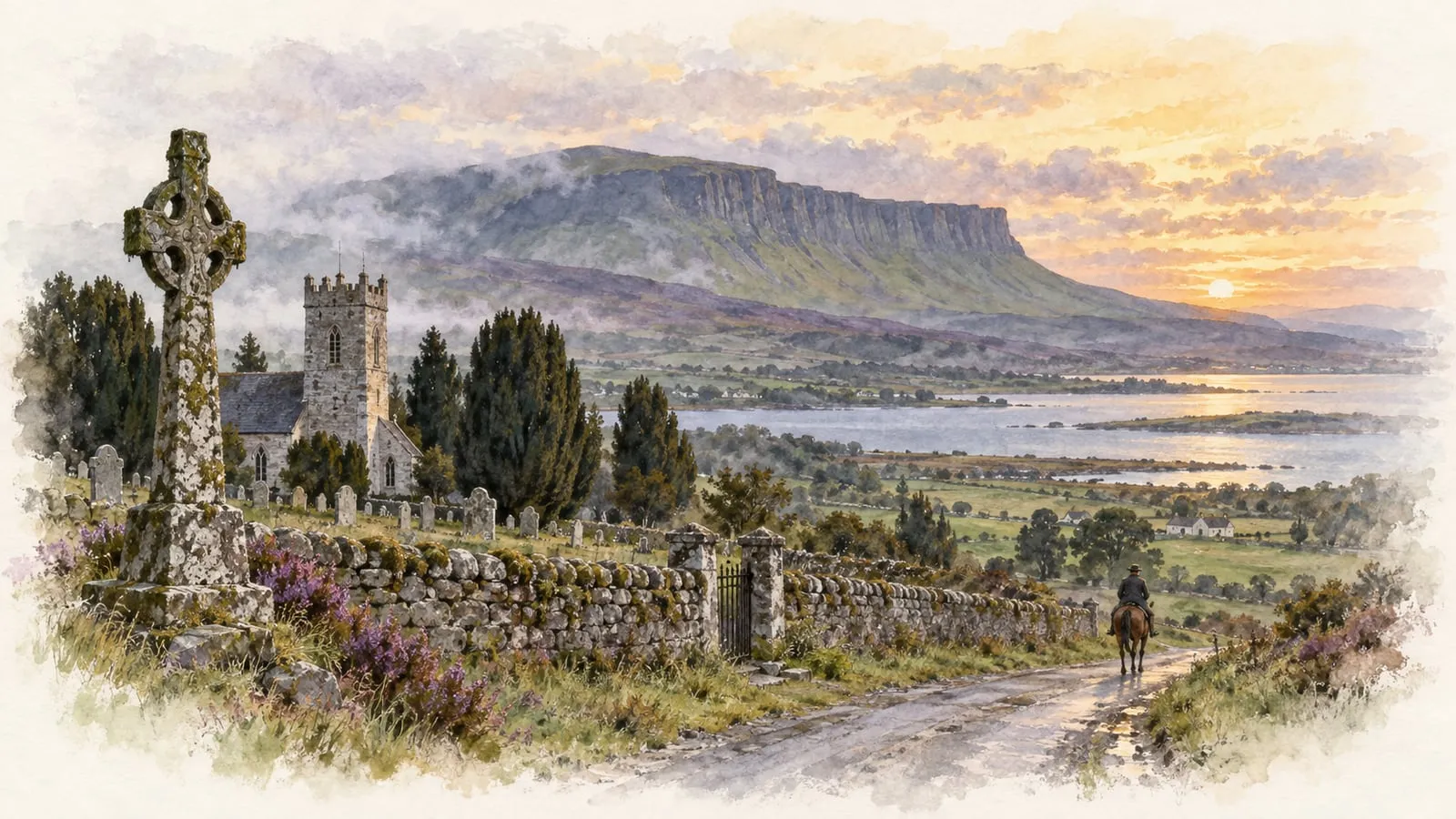
The refrain moves to a tomb where the dead stand upright. Wind comes up from the shore, and as it roars, the old bones on the mountain shake. The shaking may be fear, cold or a stirring towards life: the poem leaves it unexplained.
Lines 11 to 16Bribes and threats
The banners come to bribe, to threaten, or to whisper that a man is a fool to care which king rules once his own right king has been forgotten. It is the voice of every persuader who says loyalty to a lost cause is mere stupidity.
Lines 17 to 20Why do you dread us
The men turn the argument round: if their king is long dead, why are the enemies so afraid of them? The refrain returns, now with faint moonlight falling into the tomb, and again the bones shake in the wind.
Lines 21 to 26The cook and the horn
The tower's old cook, who climbs out at dawn to catch small birds while the men sleep, swears he has heard the king's great horn. The men dismiss him as a lying hound. They do not need the promise of the king's return: they stand guard, bound by their oath.
Lines 27 to 30The dark grows blacker
The last refrain is the darkest: in the tomb the dark grows blacker, the wind comes up from the shore, and the old bones on the mountain shake. The poem ends not on victory or rescue but on waiting, cold and wind.
Themes
Loyalty
The men keep faith with a king who may be dead and a cause that others have forgotten. They are poor and mocked, yet "oath-bound". The poem admires loyalty that does not depend on reward or even hope: they dismiss the cook's tale of the horn and keep their guard anyway.
Resisting pressure
The banners stand for every outside force that tries to win people over by money, fear or clever argument. The men refuse all three. Their sharp question, why their enemies dread them so, suggests that even a small, faithful band still holds a power the world fears.
Death and waiting
The refrain's upright dead are waiting too, in a tomb where the light fades from moonlight to deeper black. Written in the last days of Yeats's life, the poem sets the living guard beside the dead on the mountain, both held in a long vigil, with the wind as the only answer.
Context
The poem is usually taken to be the last Yeats wrote. It is dated 21 January 1939, a week before his death on 28 January at the Hôtel Idéal Séjour on Cap Martin in the south of France, where he spent his last winter and finished his last poems. It was first published in Last Poems and Two Plays (Cuala Press, Dublin, 1939).
Old Irish tales tell of kings and warriors buried standing upright, armed and facing their enemies, and of sleeping heroes who will wake at the sound of a horn; the poem seems to draw on such stories. Readers have long debated whom the men and their king stand for, but Yeats leaves them unnamed, and the poem works as a picture of loyalty in any cause.
Form
Three six-line stanzas of four-beat lines rhyming ABABCC, each followed by a four-line refrain. The refrain keeps its last three lines almost unchanged but alters the first each time, from the upright dead to faint moonlight to blacker dark, so the poem darkens as it goes. Its strong, marching rhythm suits the soldiers' stubborn guard.