Alternative Song for the Severed Head in 'The King of the Great Clock Tower'
About the text
Yeats first published this poem in 1935. It is out of copyright in Ireland and the EU, but in the United States it stays in copyright until the start of 2031, and this site is served partly from American servers. So for now we give the notes without the full text; it will appear here in 2031.
It begins: Saddle and ride, I heard a man say
In brief
SummaryHeroes of Yeats's own poems and plays ride out over Sligo's mountains.
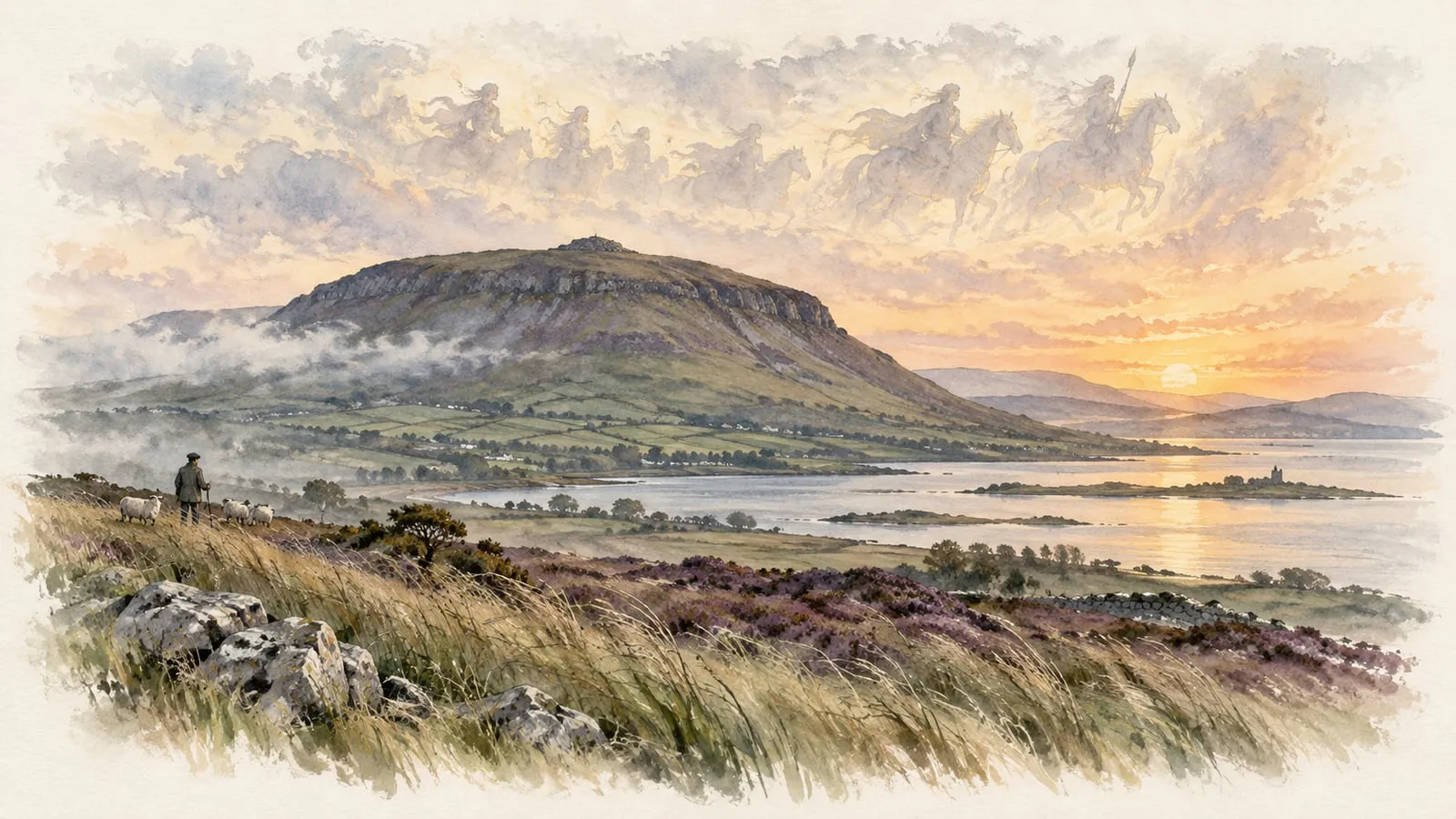
A song for the severed head to sing in Yeats's play The King of the Great Clock Tower. A voice calls the riders out of Ben Bulben and Knocknarea, and a ghostly hunt gathers on the mountainside. The riders are tragic figures, many of them from Yeats's own earlier work: Cuchulain, Niamh, a pair of lovers at chess, Aleel and his Countess, Hanrahan, and last a lonely king with feathers for hair. What drew them so far from home is heroic wantonness. Between the lines a clock asks its question and a bell strikes a slow low note.
Lines to remember
A slow low note and an iron bell.
What says the Clock in the Great Clock Tower?
Line by line
Lines 1 to 7Saddle and ride
A man cries to saddle and ride out of Ben Bulben and Knocknarea. The tragic riders turn from the tide at Rosses and meet on the mountainside, like a hunt gathering. The refrains, a question to the Clock and a slow bell note, give the gallop an ominous pulse.
Lines 8 to 14Heroic wantonness
What brought them so far from home? The song names Cuchulain, who fought all night with the sea, Niamh, who rode over it, and a young pair who sat so still over their chess. The answer is "heroic wantonness": a reckless, passionate excess that makes them heroes.
Lines 15 to 21The feathered king
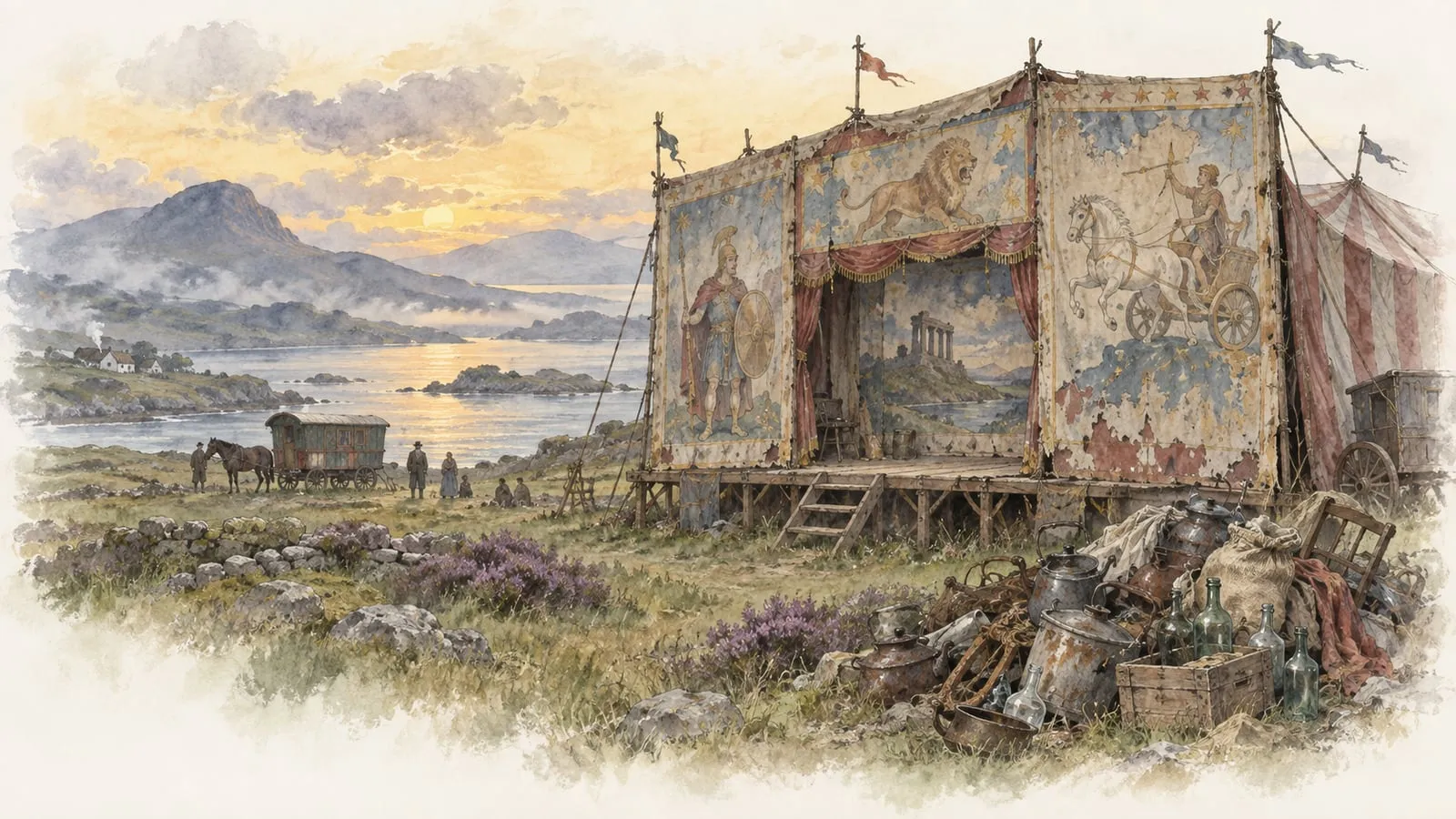
Aleel comes with his Countess, and Hanrahan, who only seemed a wild womaniser. Last, riding alone, comes a king whose people stared at him because he had feathers instead of hair, a strange, half-comic figure to end the procession. The bell tolls again.
Themes
Yeats's own creations
The riders are mostly characters Yeats had written about: Cuchulain in his poems and plays, Niamh in The Wanderings of Oisin, Aleel and the Countess in The Countess Cathleen, Hanrahan in his stories. Late in life he summons them back like a roll-call, much as he would do again in "The Circus Animals' Desertion".
Passion and fate
What unites the riders is "heroic wantonness", a passion that drives them beyond sense, into the sea, into love, into death. Over them the Clock asks its question and the iron bell answers with a slow low note: time is running out, and the heroic life is lived against it.
Context
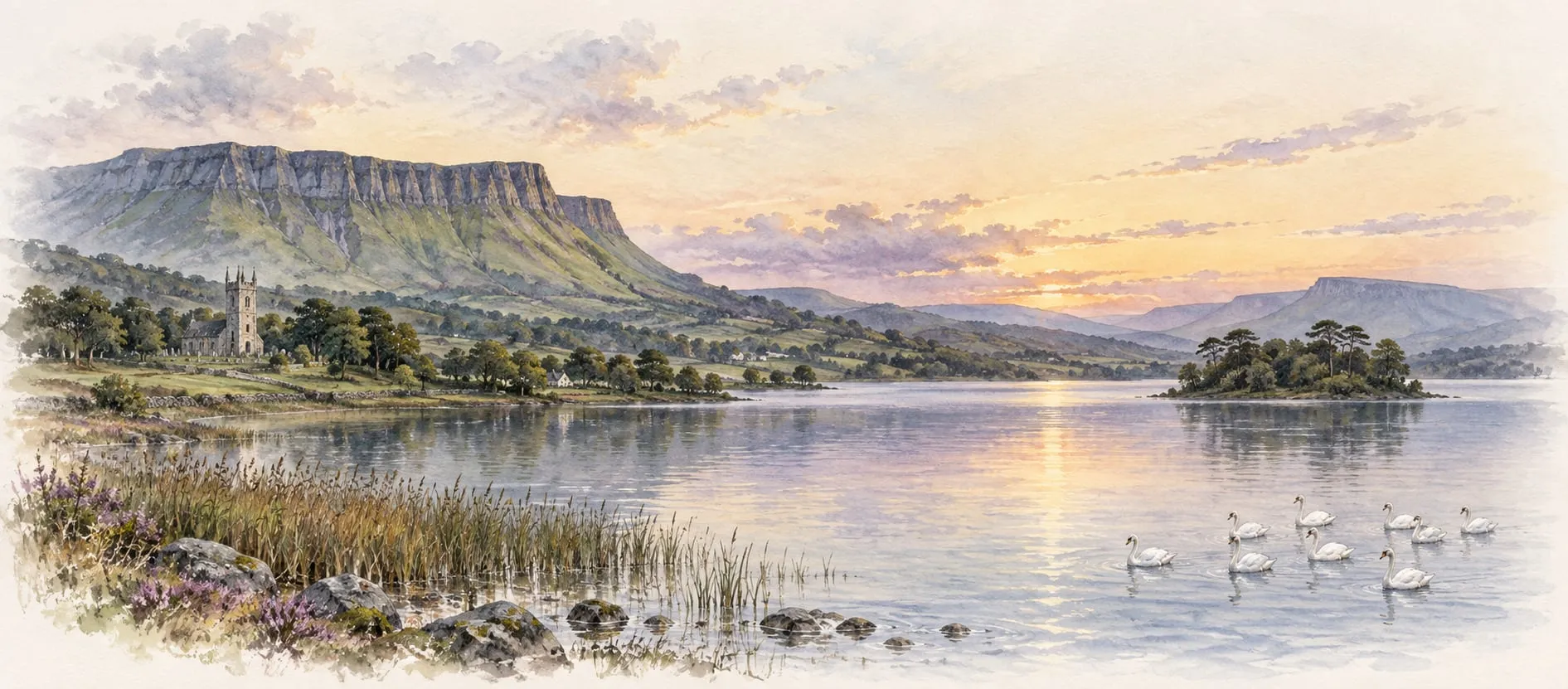
In Yeats's verse play The King of the Great Clock Tower, a wandering poet is beheaded and his severed head sings to the Queen. This alternative song for the head was collected in A Full Moon in March (Macmillan, 1935). The lovers at chess are probably Deirdre and Naoise, who play chess while awaiting death in Yeats's play Deirdre. Ben Bulben, Knocknarea and Rosses Point are the Sligo landscape of his childhood, long linked in his poems with the riding host of the Sidhe.
Form
Three seven-line stanzas. Each opens with two rhyming lines, then the refrain question about the Clock, then three lines on a single rhyme or near rhyme, and closes with the refrain line about the bell. The quick four-beat lines have the gallop of a riding song, checked each time by the heavy, slow refrain.