After Long Silence
About the text
Yeats first published this poem in 1932. It is out of copyright in Ireland and the EU, but in the United States it stays in copyright until the start of 2028, and this site is served partly from American servers. So for now we give the notes without the full text; it will appear here in 2028.
It begins: Speech after long silence; it is right
In brief
SummaryTwo old lovers talk again and find wisdom in bodily decline.
Two people who were once lovers meet and talk after a long silence. Everyone else they loved is estranged or dead, the lamp is shaded and the curtains are drawn against the night. In that closed, private room it is right, the speaker says, that they should talk and talk again about the great subject of art and song. The last lines give the wisdom they have reached: the body's decay is wisdom, and when they were young they loved each other and knew nothing.
Lines to remember
Bodily decrepitude is wisdom; young
Line by line
Lines 1 to 4The shaded room
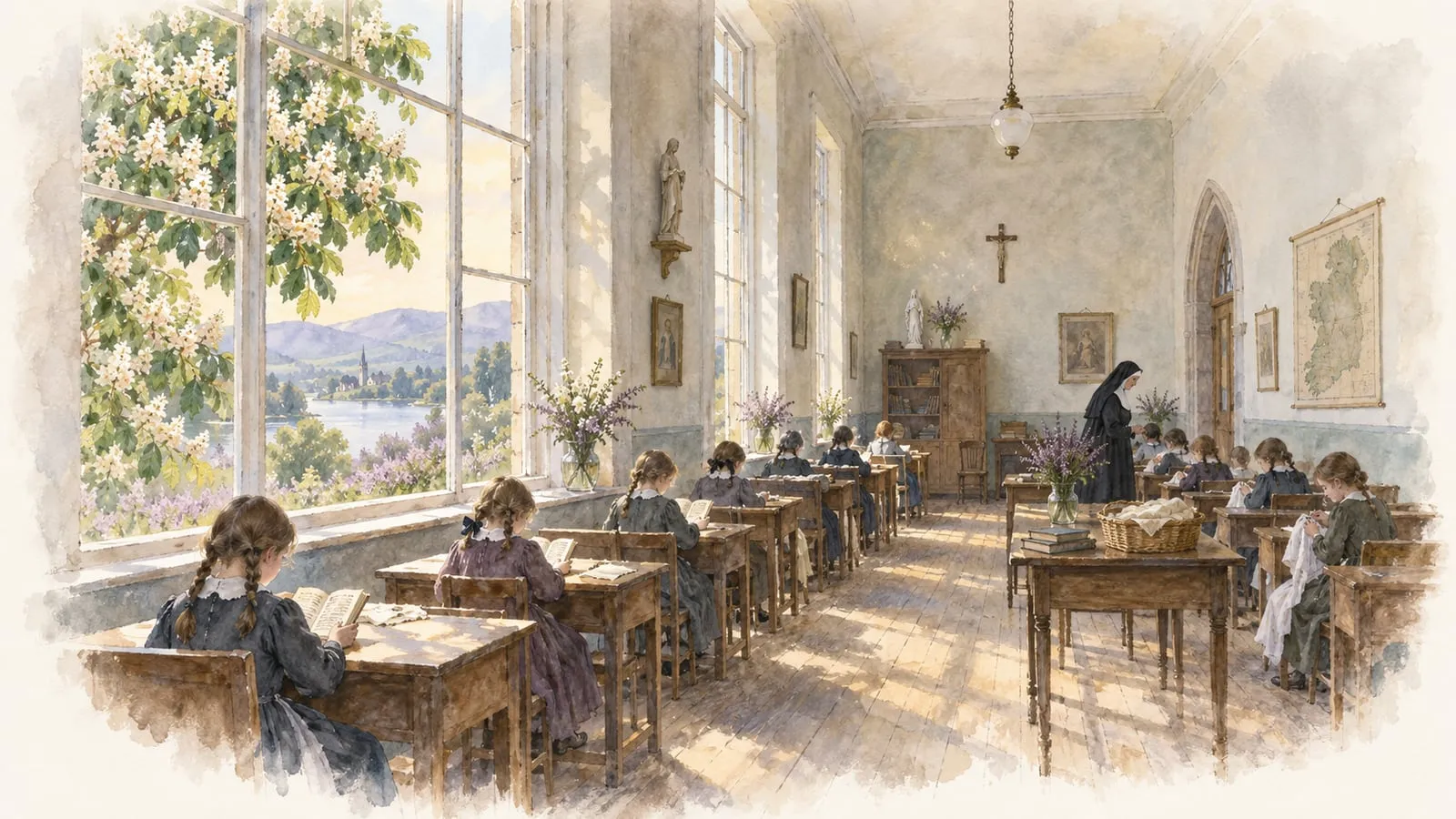
Speech has returned after long silence. Other lovers have drifted away or died. The lamplight is hidden under its shade and the curtains are drawn on an "unfriendly night", so the world outside is shut out and the two are alone together.
Lines 5 to 8Age and ignorance
It is right that they discuss again and again the supreme theme of art and song. The poem then states its paradox: decrepitude is wisdom. The final line looks back without self-pity. Young, they loved and were ignorant; now they understand, but the loving is past.
Themes
Age and wisdom
The poem's central claim is that "Bodily decrepitude is wisdom". Age takes away the body's powers but gives understanding, and the old lovers can now talk calmly about what once drove them. The claim is both consoling and sad, since the wisdom comes too late to change how they loved.
Love remembered
The two were lovers once, and the lamplit privacy recalls earlier intimacy. Now intimacy takes the form of conversation. The final phrase, that they "were ignorant" when young, looks back on passion with tenderness and regret together.
Art
What they talk about is "Art and Song", the subject that outlasts their love. Talk about art replaces the love itself, suggesting that for Yeats art is the one theme large enough to hold a whole life.
Context
The poem belongs to the sequence Words for Music Perhaps, first collected by the Cuala Press in 1932 and then in The Winding Stair and Other Poems (Macmillan, 1933). It is often linked to Yeats's lifelong friend Olivia Shakespear, his first lover in the 1890s, with whom he stayed close until her death in 1938.
In a sequence full of young lovers and wild voices, this poem gives the view from old age: quieter, clearer and more rueful.
Form
A single eight-line stanza of five-beat lines rhyming ABBACDDC, the rhymes folding inward like the closed room. It moves as one long sentence to the colon in line 7, then states its paradox in plain words. The line break after "young" leaves youth hanging before the verdict.