Three Songs to the One Burden
About the text
Yeats first published this poem in 1939. It is out of copyright in Ireland and the EU, but in the United States it stays in copyright until the start of 2035, and this site is served partly from American servers. So for now we give the notes without the full text; it will appear here in 2035.
It begins: The Roaring Tinker if you like
In brief
SummaryA tinker, a recluse and a dead actor, joined by one wild refrain.
Three linked songs, each with the same refrain of fierce horsemen riding from mountain to mountain. In the first, Mannion the Roaring Tinker brags of beating up common louts, claims descent from the sea god Manannan, and dreams of an old wildness that would throw likely couples into bed. In the second, Henry Middleton, a recluse in a small forgotten house, locks his gate on a corrupted world yet pities the young, and draws strength from memories of old country talk. The third calls on the players of the theatre to praise those of their own who fought in 1916, above all the actor Connolly, the first man shot, and ends on Pearse's warning that every generation must shed blood for Ireland.
Lines to remember
From mountain to mountain ride the fierce horsemen.
Line by line
Lines 1 to 9The Roaring Tinker
Mannion introduces himself: call him the Roaring Tinker if you like. He beats up the common sort without shame, since in his view the common breeds the common and a lout begets a lout. When he takes on half a score of them, he knocks their heads about.
Lines 10 to 18Son of Manannan
All Mannions, he claims, descend from Manannan, the sea god, who was rich on every shore yet never lived behind walls, never mended a pot or pan. A roaring, ranting god is the one a wandering man likes best.
Lines 19 to 27If the old god rose
If Crazy Jane could shake off old age and that old god could rise again, they would drink together and go out to rule town and country, throwing likely couples into bed and knocking the others down. The fantasy is of energy and breeding restored.
Lines 28 to 36Henry Middleton
The second song's speaker has a small estate and a small forgotten house on a storm-bitten green. He scrubs his own floors, cooks and makes his bed, and only the postman and garden-boy have keys to his gate. It is a portrait of dignified, stubborn solitude.
Lines 37 to 45Pity for the young
Though he has shut them out, he pities the young, who learn a "devil's trade" from those around them: drink and gambling by day, robbery by night. The wisdom of the people is gone, so how can the young go straight.
Lines 46 to 54The Green Lands
On Sunday afternoons he walks the Green Lands in a fashionable coat, and memories of the talk of henwives and odd old men make him strong. The harbour pilots do not know how long he has lived. Old folk speech is his hidden source of strength.
Lines 55 to 63Praise the players
The third song calls on the players to praise 1916: those from the pit, the gallery or the stage who fought at the Post Office or around City Hall. They are to praise every man who came back and every man who fell.
Lines 64 to 72The player Connolly
The first man shot that day was the actor Connolly, killed near City Hall. He had presence and a fine voice, and lacked only the years that bring skill; he might have become a famous, brilliant figure on the stage.
Lines 73 to 81Every generation
Some went out not to win but to die, so that Ireland's mind might be greater and her heart rise. Yet who knows what is to come, since Pearse had said that Ireland's blood must be shed in every generation. The poem ends on an unsettling prophecy.
Themes
Energy and breeding
Mannion scorns the "common" and sees character as something inherited from a wild god. His rough bragging echoes Yeats's late worries, voiced also in On the Boiler, about the decline of vigour and quality in modern Ireland. The poem gives these ideas to a brawling tinker, which both sharpens and undercuts them.
Solitude and tradition
Henry Middleton stands apart from a society he thinks corrupt, yet he is not bitter. His strength comes from the talk of henwives and old men, the folk wisdom Yeats had gathered all his life. The middle song treats the old oral culture as the thing now lost, "The wisdom of the people's gone".
1916 and sacrifice
The last song honours the Rising through the theatre, remembering an actor as the first to die. Its praise turns uneasy at the close: Pearse's words about blood in every generation are quoted not as comfort but as a warning of more violence to come.
Context
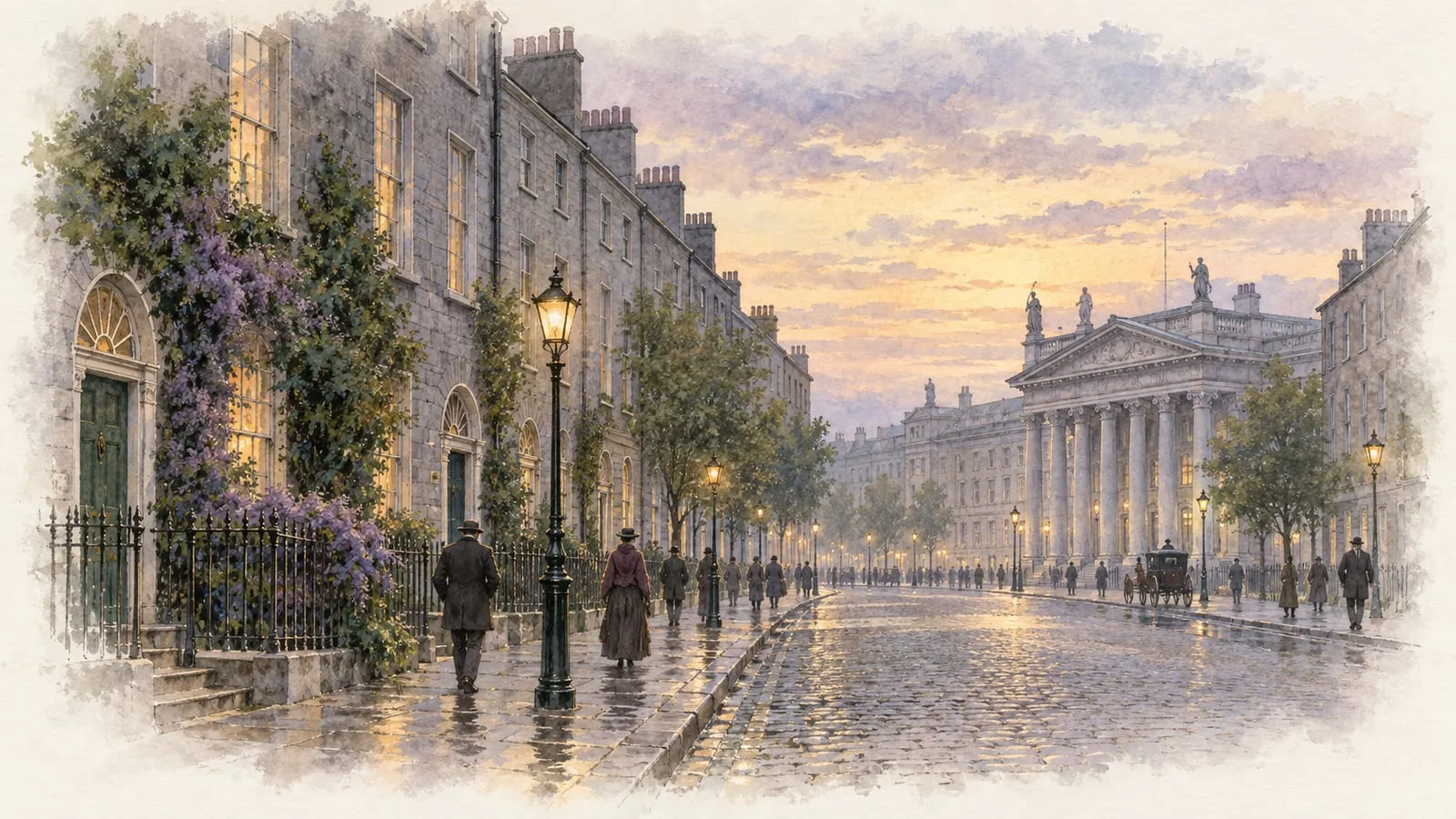
First published in Last Poems and Two Plays (Cuala Press, Dublin, 1939), soon after Yeats's death. The Connolly of the third song is Sean Connolly, an Abbey Theatre actor who was shot near Dublin City Hall on Easter Monday 1916. The Post Office is the General Post Office in O'Connell Street, the rebels' headquarters.
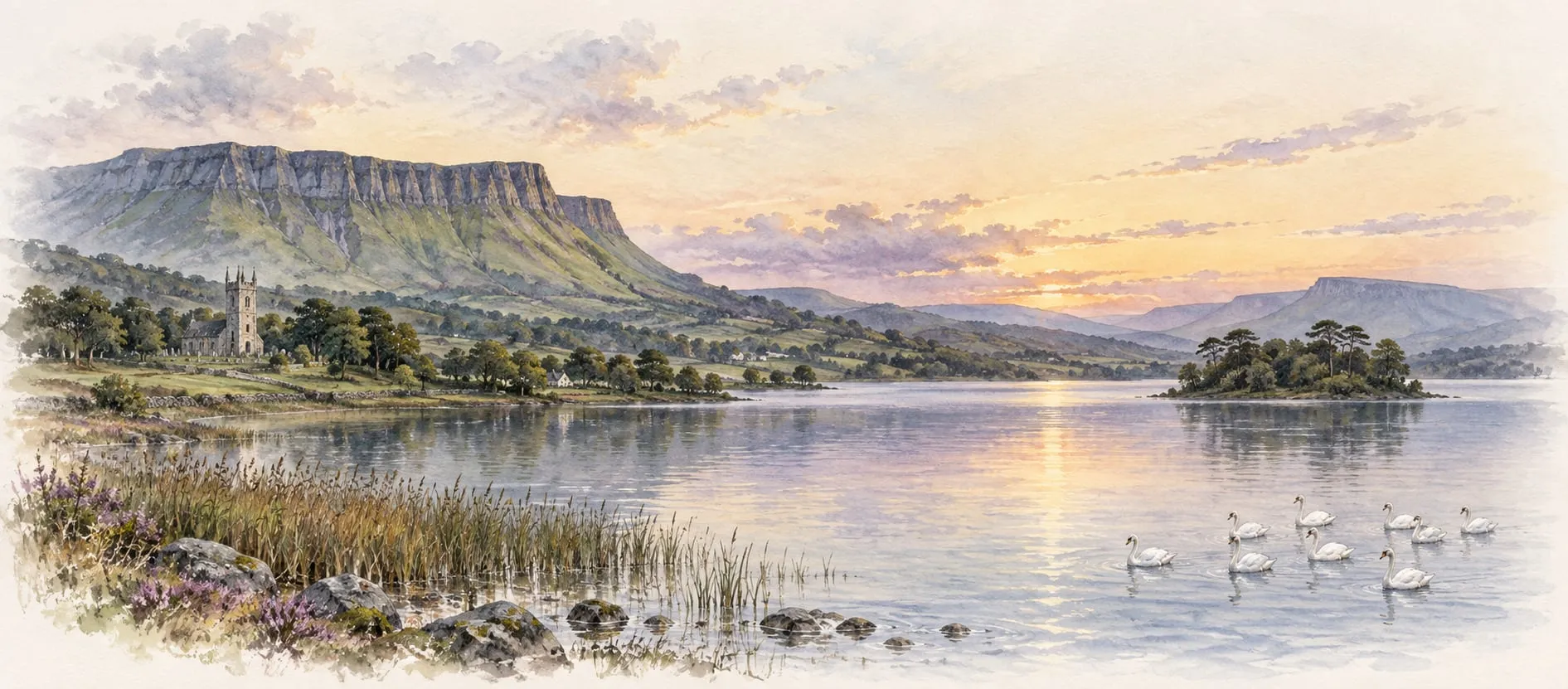
Yeats had a reclusive cousin named Henry Middleton in Sligo, and the second song appears to draw on him; the Green Lands and the harbour pilots are thought to point to Rosses Point. The mention of Crazy Jane links the first song to the voices of Words for Music Perhaps.
Form
Three songs of three nine-line stanzas each. Every stanza has eight lines of ballad measure, alternating four and three beats and rhyming on the even lines, then the long, galloping refrain. A "burden" is a refrain, and this one, heavy with hoofbeats, binds three unlike speakers into a single, fierce tune.