Those Images
About the text
Yeats first published this poem in 1938. It is out of copyright in Ireland and the EU, but in the United States it stays in copyright until the start of 2034, and this site is served partly from American servers. So for now we give the notes without the full text; it will appear here in 2034.
It begins: What if I bade you leave
In brief
SummaryThe poet urges art away from politics, back to the wild images.
A short, direct poem of advice. The speaker tells someone to leave the cavern of the mind for the sunlight and wind. He never asked them to go to Moscow or Rome: they should give up that drudgery and call the Muses home. Instead they should seek the images that make up the wild, the lion and the virgin, the harlot and the child, and find an eagle in mid-air. Those five, he says, are what make the Muses sing.
Lines to remember
Call the Muses home.
Line by line
Lines 1 to 4Out of the cavern
The poem opens with a question: what if he told his listener to leave the cavern of the mind. Sunlight and wind offer better exercise. The cavern may recall Plato's cave, where people mistake shadows for reality.
Lines 5 to 8Not Moscow or Rome
He never told anyone to go to Moscow or Rome, the capitals of communism and of fascism or the Church. Serving such causes is drudgery. The poet should renounce it and bring the Muses home.
Lines 9 to 16The five images
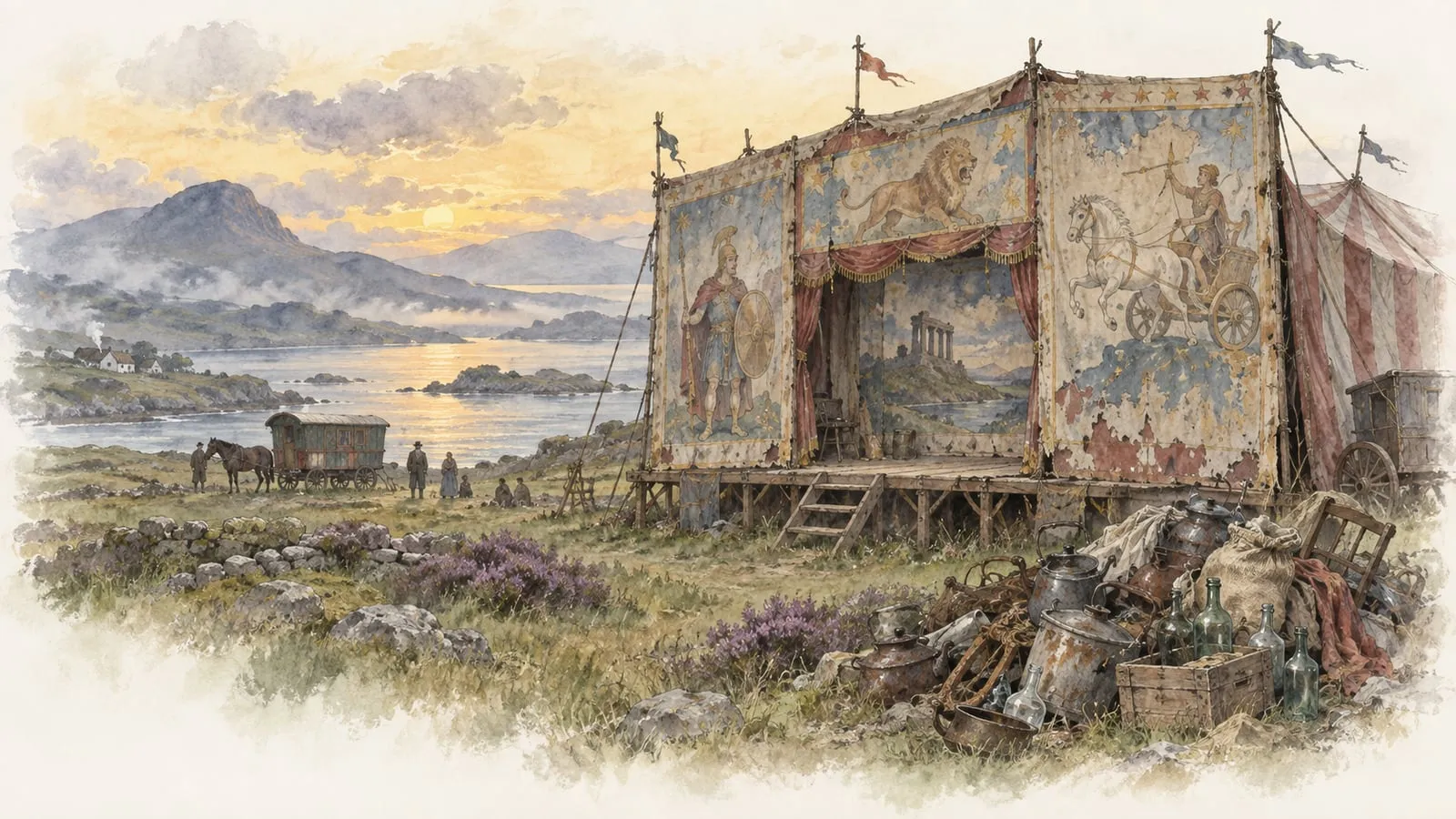
Seek instead the images that make up the wild: lion, virgin, harlot, child, and an eagle in middle air. Counting them gives the "five" of the last stanza. These primal figures, of strength, innocence, sex, youth and vision, are what move the Muses to song.
Themes
Art and politics
Moscow and Rome stand for the political faiths of the 1930s, when writers were urged to serve a cause. Yeats calls that service "drudgery". The poem argues that poetry should not become propaganda for any party; its business is the deep images of human life.
The wild
Against the enclosed "cavern of the mind" the poem sets sun, wind and the wild. The lion, virgin, harlot, child and eagle are elemental figures, the kind found in myth and dream. For Yeats they are the true sources of art, older and more lasting than any ideology.
Context
First published in New Poems (Cuala Press, Dublin, 1938). In the 1930s many younger poets were drawn to communism, while others looked to Mussolini's Italy or to the Catholic Church. Yeats, though himself drawn at times into politics, insists here that the poet's first loyalty is to the Muses and the images that feed them.
Form
Four quatrains of short three-beat lines, rhyming only the second and fourth lines of each. The poem is spare and brisk, almost a set of instructions, and the last two stanzas are built as lists that pile up the images the argument calls for.