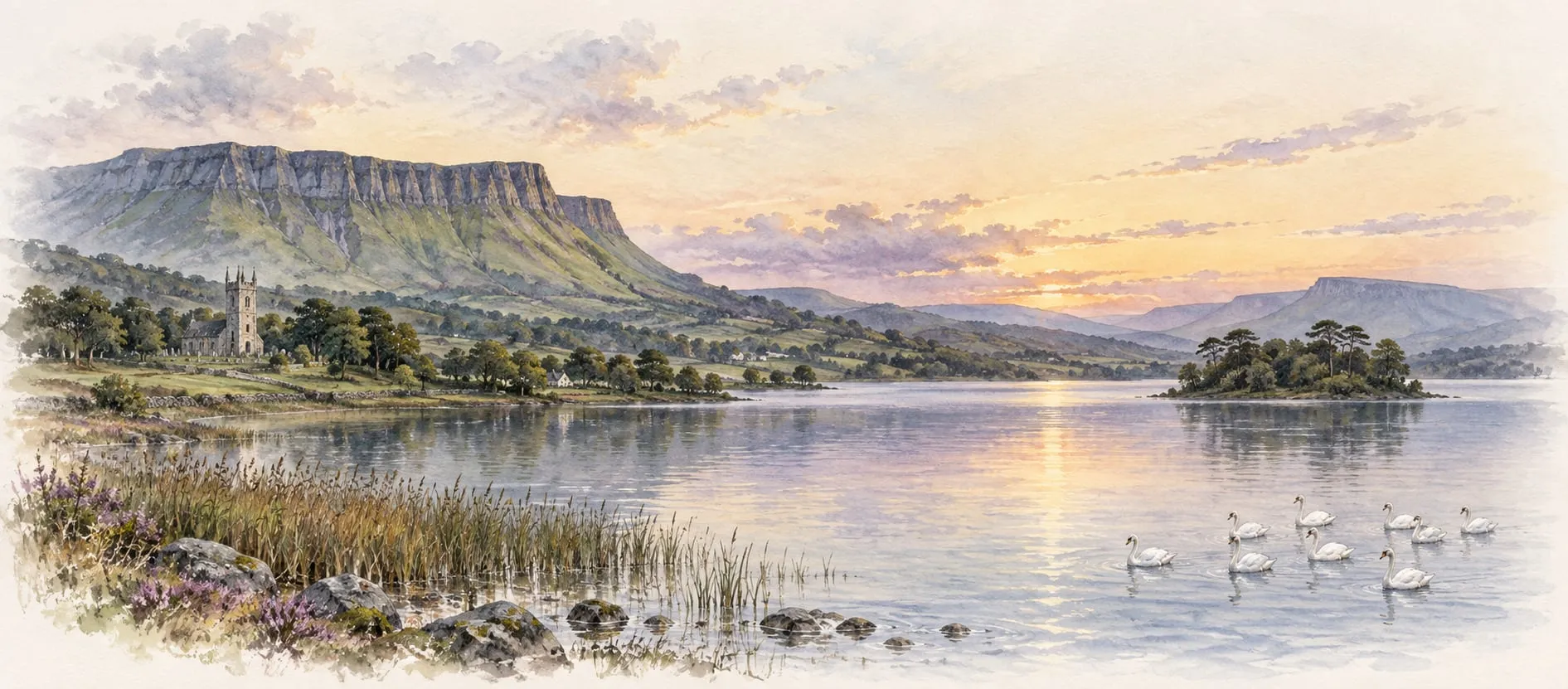
Anashuya and Vijaya
Earlier titled "Jealousy"
Listen
A little Indian temple in the Golden Age. Around it a garden; around that the forest. Anashuya, the young priestess, kneeling within the temple.
Anashuya
Vijaya
Entering and throwing a lily at her.
Anashuya
Vijaya
Anashuya
Vijaya
Anashuya
Sings, coming out of the temple.
Sits down on the steps of the temple.
Vijaya
Anashuya
Vijaya
Anashuya
Vijaya
Anashuya
Going away from him.
Bursting into tears.
Vijaya
Anashuya
Vijaya
Anashuya
Vijaya
Anashuya
Vijaya goes.
Text: Poetry, by W. B. Yeats (Standard Ebooks, 2024), from the collected editions of 1908 to 1928. Public domain.
In brief
SummaryA young priestess discovers her lover still thinks of another woman.
A short verse play set at a little Indian temple in a golden age. Anashuya, a young priestess, prays for the land but keeps slipping in prayers for her lover, Vijaya, and threats against him if he loves anyone else. Vijaya arrives and calls her "Amrita". She asks who that is; he says it is his mother's name. She sings the sad thought away, they share her evening rice, laugh at a flamingo that steals it, and he sings to the first stars. Then, in the middle of a tender speech, he says "Amrita" again. Anashuya breaks into tears and curses the other woman. Vijaya admits he once loved another, and she makes him swear by the parents of the gods never to love that woman again. Forgiving him in a song to a new star, she sends him away and prays to Brahma to guard all sleeping creatures, including "my love, Vijaya", and to "give him dreams of me."
Lines to remember
The phantom, Beauty, in a mist of tears;
I loved another; now I love no other.
Trouble his sleeping: give him dreams of me.
Line by line
Lines 1 to 10A distracted prayer
Anashuya prays for peace on the land and its corn, but her lover keeps breaking in. Between blessings she asks that tranquillity walk by his elbow if he loves "No other", and, if he does, "May panthers end him." Her last wish is to stand with him after death, "With mingling hair".
Lines 11 to 19The wrong name
Vijaya enters, throwing a lily at her: "Hail! hail, my Anashuya." She tells him to be still while she prays, and he answers "I will wait here, Amrita." She pounces: "Who is Amrita? Sorrow of all sorrows!" His reply, "My mother's name", comes a little too quickly.
Lines 20 to 25A sad thought passes
Coming out of the temple, Anashuya sings. "A sad, sad thought" went by her and has gone, so she asks the "little stars" first to sigh, then to raise a "rapturous carol" to Brahma, who laid them "on the gates of evening with his quiet hands". For now, her jealousy is sung away.
Lines 26 to 31Evening falls
She has brought her evening rice, and the sun, weary, "has laid his chin on the gray wood" among his poppies. Vijaya adds that this is the hour when Kama, god of love, rises "full of sleepy laughter" and showers "his fragrant arrows".
Lines 32 to 43The thieving flamingo
The sacred flamingoes stalk into the temple, "Aged and wise". Anashuya teases that she named the tall one after Vijaya: "He is a famous fisher". When the bird snaps up her rice and Vijaya chases it off, she rewards him with a kiss. It is the warmest, most playful moment in the poem.
Lines 44 to 49Song to the stars
Vijaya sings to the "first few stars", asking them to sing of her, and to sigh and "drop many an azure tear". The song's long, swinging rhymed lines stand apart from the blank verse around them.
Lines 50 to 61The second slip
Anashuya asks what the stars know of tears. Vijaya answers with a grand vision of a suffering world, frozen men in the north, lions cowering in burning forests, and "The phantom, Beauty, in a mist of tears", while the two of them sit safe in "woven woods". Then he ends: "Amrita, while", and stops.
Lines 62 to 68Tears and confession
Anashuya bursts into tears and curses her rival: "may some dreadful ill befall her quick!" Vijaya confesses, "I loved another; now I love no other", and places the other woman on the village border, living with her father, "the blind wood-cutter".
Lines 69 to 82The great oath
She makes him swear "by the parents of the gods", who live on "sacred Himalay". Her description of them is the most majestic passage in the poem: vast shapes older than the sea, their hair full of birds' nests, deer grazing round their feet. He swears.
Lines 83 to 88Song to a new star
Anashuya sings her forgiveness to "O new star", a hunter in the sky, asking it to shoot "shafts of quietness" at Vijaya so that he keeps "An inner laughter" and kisses his hands to her in his sleep.
Lines 89 to 91Back to duty
She sends him away without letting him speak, "Nay, no word, no word", and returns to her role with the words she used at the start: "I, priestess of this temple, offer up" prayers for the land.
Lines 92 to 98Prayer to Brahma
Alone, she asks Brahma to guard the sleeping lambs, cattle, flies, mice and flamingoes, and slips her lover in among them. The ending is gentle and funny: after all her piety, her last request is "give him dreams of me."
Themes
Jealousy
The poem was once called "Jealousy", and it shows the feeling at work from the first lines, where Anashuya's prayer turns into "May panthers end him". One slipped name, "Amrita", is enough to spoil the evening, and her curse, "may some dreadful ill befall her quick!", is shockingly fierce from a priestess. Love and suspicion are tangled throughout.
Love and devotion
Anashuya's sacred duty and her private love keep crossing. She prays for the land but dreams of standing with Vijaya after death, "With mingling hair", and her final prayer to Brahma places him among the lambs and flamingoes. The poem treats her divided heart with warmth and a little humour.
An enchanted world
The setting is a dream of ancient India: temple steps, sacred flamingoes, Kama's "fragrant arrows", the parents of the gods on "the far Golden Peak". Vijaya's picture of "The phantom, Beauty, in a mist of tears" and the frozen north shows a sad world beyond, but the lovers' "woven woods" hold it off for a while.
Context
The poem was first collected in The Wanderings of Oisin and Other Poems (London, January 1889). It was once titled "Jealousy", and Yeats later placed it among the early lyrics he called "Crossways". It is one of three poems there with Indian settings, beside "The Indian upon God" and "The Indian to His Love", reflecting the young Yeats's interest in Indian religion and thought.
It reads like a scene from a play, with named speakers and directions such as "Entering and throwing a lily at her" and "Bursting into tears". Yeats was already writing verse drama in the 1880s, and this piece has the same mix of lyric song and quick dialogue.
Form
A short dramatic scene with stage directions, 98 lines in all. Most of it is blank verse, unrhymed lines of five beats, which lets the lovers talk naturally and interrupt each other. Three songs break in, two for Anashuya and one for Vijaya, in longer rhymed lines ("slowly" and "wholly", "stars" and "cars", "keep" and "sleep"), marking moments when feeling lifts into music.