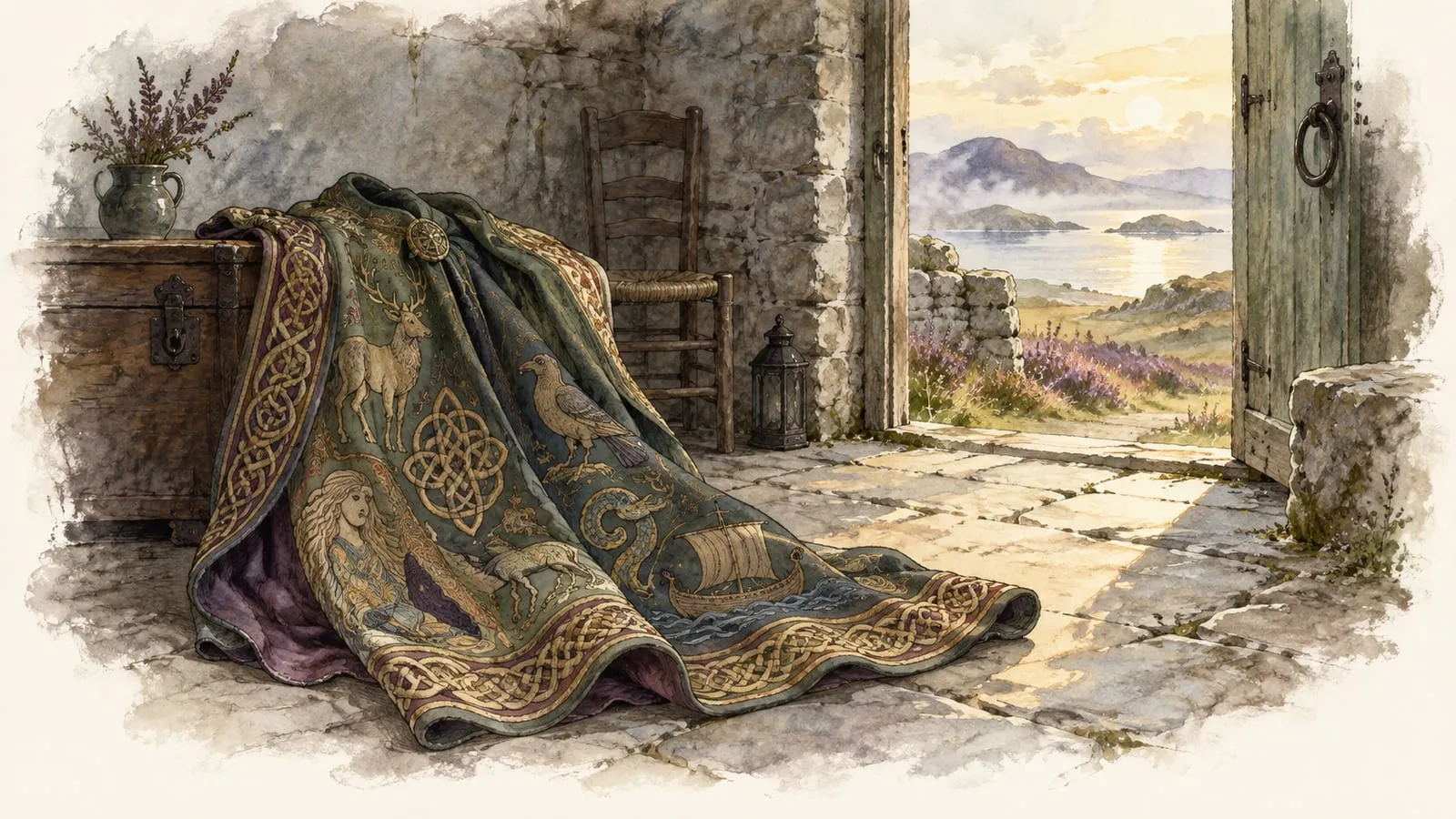
A Coat
Listen
Text: Poetry, by W. B. Yeats (Standard Ebooks, 2024), from the collected editions of 1908 to 1928. Public domain.
In brief
SummaryA poet abandons his ornate early style to imitators and walks naked.
The poet says he made his song a coat, embroidered from heel to throat with "old mythologies". Fools took the coat and wore it in public as though they had made it themselves. He does not fight them for it. Let them keep it, he tells his song, because "there's more enterprise / In walking naked." In ten short lines the poem announces a change of style, from decorated to bare.
Lines to remember
I made my song a coat
In walking naked.
Line by line
Lines 1 to 4The embroidered coat
His song was dressed in "embroideries / Out of old mythologies", covered "From heel to throat". The coat is his early poetry, rich with ancient legend, and the image makes style something worn on the outside.
Lines 5 to 7The fools
"The fools caught it" and showed it off "in the world's eyes / As though they'd wrought it". Imitators have borrowed his manner and passed it off as their own.
Lines 8 to 10Walking naked
Instead of complaining, he lets the coat go. The final line, "In walking naked", is the boldest in the poem: writing without ornament takes more daring than wearing borrowed finery.
Themes
Changing style
The coat of "old mythologies" stands for the dreamy, legend-filled verse of his early books. "Walking naked" stands for the plain, direct speech he was turning to. The poem is a small manifesto, and its own bare language shows the new style at work.
Imitation
The "fools" who wear the coat "As though they'd wrought it" are imitators who copy the surface of his work. His reply is scornful but calm: what they took was only the outside, and he can do better without it.
Context
"A Coat" was collected in Responsibilities, published by the Cuala Press in May 1914, where it comes near the end of the poems. Yeats's early poetry drew heavily on Irish myth and legend, and by this time others were writing in the same manner. The poem marks his turn to the harder, barer style of his middle years.
Form
Ten short lines of uneven length, with rhymes that pair up irregularly: "coat" and "throat", "embroideries" and "mythologies", "caught it" and "wrought it", "eyes" and "enterprise". The last word, "naked", only half rhymes with "take it", leaving the ending plain and exposed.
Minor verbal revisions after 1916.