The Three Monuments
Listen
Text: Poetry, by W. B. Yeats (Standard Ebooks, 2024), from the collected editions of 1908 to 1928. Public domain.
In brief
SummaryThree statues of flawed heroes laugh at politicians preaching purity.
Politicians hold public meetings beneath the statues of three famous patriots, one high on a pillar among the birds and two shorter ones on either side. The "popular statesmen" preach that purity built the state and keeps it from decay, and they warn the people off ambition and intellect, since intellect breeds pride and pride breeds impurity. The poem's single long sentence ends with its punchline: "The three old rascals laugh aloud." The heroes on their pedestals were anything but pure, and they know it.
Lines to remember
The three old rascals laugh aloud.
Line by line
Lines 1 to 4The statues
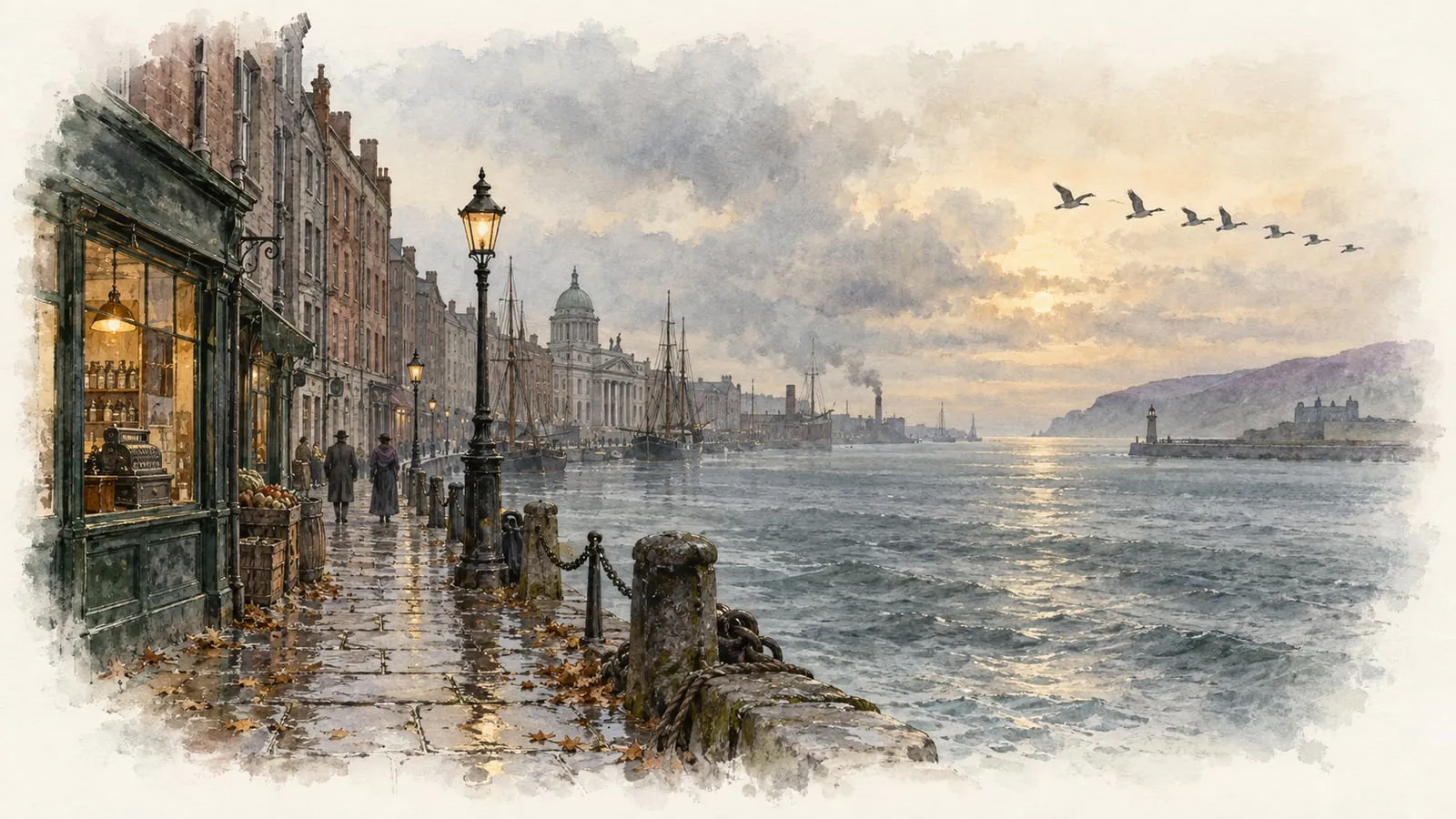
The scene is a public meeting held under monuments to "Our most renowned patriots". One stands high "among the birds of the air", with "A stumpier on either hand": a mocking but affectionate way to describe grand civic statues.
Lines 5 to 11The sermon
The statesmen's speech is reported flatly, in their own pious terms: "purity built up the state", ambition is "base", and intellect is dangerous because it makes people proud. The chain from intellect to pride to "impurity" is set out like a school lesson, which is exactly what is being mocked.
Line 12The laugh
The last line undoes everything before it. The "three old rascals" on their columns laugh aloud, because the men the state honours most did not live by the purity now preached in their shadow.
Themes
Hypocrisy
The poem sets official rhetoric against history. The "popular statesmen" claim that purity built the state, yet the monuments they speak under honour men the poem calls "rascals". The joke lies in the gap between the sermon and the statues, and the poem never needs to spell it out.
Intellect and pride
The statesmen treat intellect as a threat because it "would make us proud", and pride leads to impurity. The poem reports this with plain distaste. Yeats valued both pride and intellect, and here their rejection sounds like a recipe for a timid, small-minded state, one its own founders would laugh at.
Context
The poem was first collected in The Tower (1928). It is usually read as describing the three monuments on O'Connell Street in Dublin: Nelson on his tall pillar, with Daniel O'Connell and Charles Stewart Parnell at either end of the street. All three were known for irregular private lives.
Yeats sat in the Irish Senate from 1922, and in his 1925 speech against the ban on divorce he pointed to these same three monuments, reminding the Senate of the private lives of the men it honoured. The poem makes the same point in twelve lines, turning a debate about public morality into a joke at the moralisers' expense.
Form
Twelve lines of four beats, rhymed in alternating pairs (ABAB CDCD EFEF). The whole poem is one sentence that runs on through a colon to its last line, so the statesmen's argument unrolls without a break until the rascals' laughter cuts it off.